
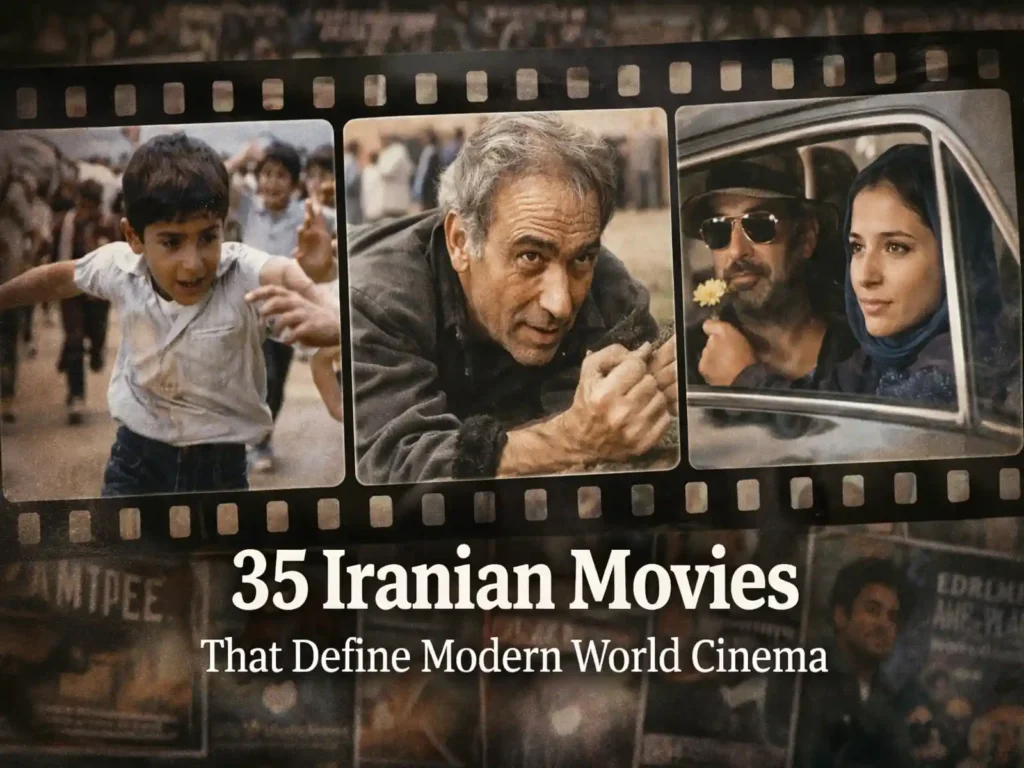
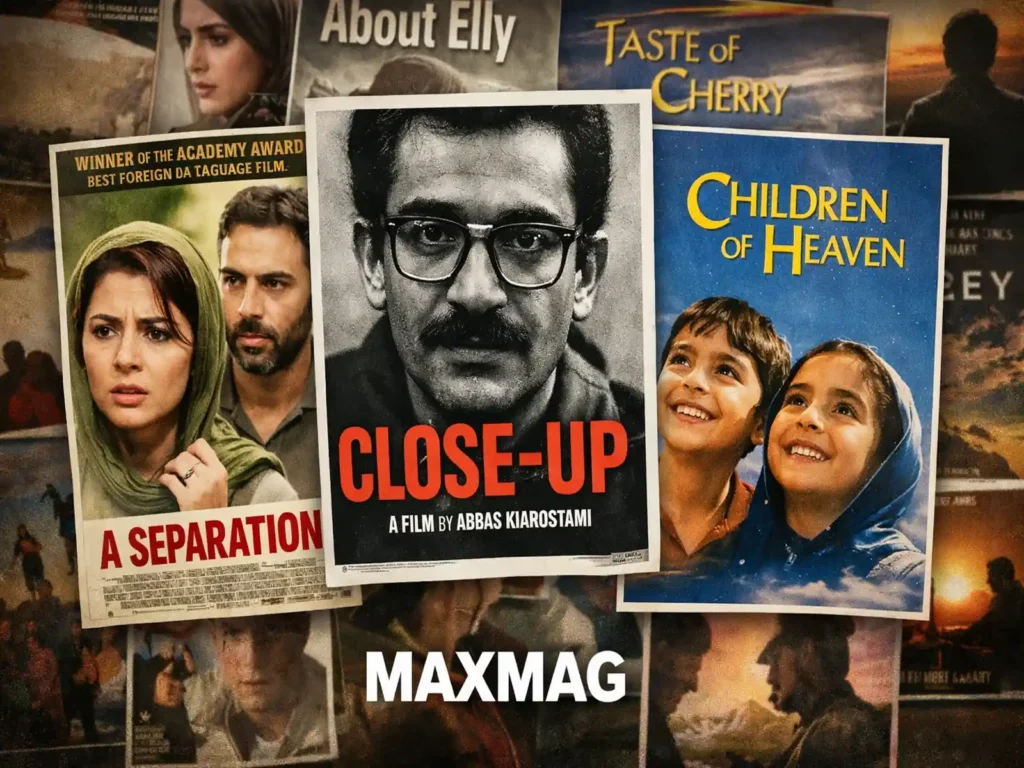
Iranian movies often look deceptively simple until the moral pressure kicks in. They’re known for social realism, poetic minimalism, and stories where rules—family, class, faith, and the state—shape every small choice. You’ll feel how a scene can turn on a pause, a doorway, or a single missing detail. Films like A Separation, Close-Up, and Children of Heaven prove how suspense can come from everyday life rather than spectacle. The performances tend to be naturalistic, almost documentary-close. The camera is patient, but never passive. Short sentence: the stakes are human. Over decades, this cinema moved from new-wave allegory to razor-sharp contemporary drama without losing its intimate pulse.
This guide helps you pick a film that matches your mood and comfort level across eras, from village paths to Tehran interiors. Each entry gives you a quick snapshot—year, director, genre, tone, suitability, and an IMDb score—so you can make confident choices fast. Some titles are family-facing and warmly accessible, while others are confrontational and emotionally heavy. You’ll also notice how Iranian New Wave craft—long takes, off-screen space, and quiet irony—echoes in newer work. Short sentence: start where you feel safe. If you want clear storytelling, begin with the Farhadi dramas; if you want contemplative cinema, follow Kiarostami. By the end, you’ll have a personal route through Persian cinema that you can revisit and expand.
How we picked Iranian movies
We aimed for breadth across decades, directors, and styles—from docufiction and allegory to tightly scripted Tehran dramas—while prioritizing craft, cultural impact, and rewatch value. Because some stories involve war trauma, state pressure, or intense domestic conflict, the “tone” and “suitable for” lines are there to help mixed households choose thoughtfully. Only titles with an IMDb rating of 6.5/10 or above were considered. The ranking is ordered from the lowest qualifying rating at #35 to the highest at #1. All IMDb ratings in this article were verified on 10 February 2026.
35. Under the Shadow (2016)
- Actors: Narges Rashidi, Avin Manshadi, Bobby Naderi
- Director: Babak Anvari
- Genre: horror, drama
- Tone: eerie, tense, claustrophobic
- Suitable for: adults only
- IMDb rating: 6.8/10
A mother and her young daughter try to keep life together in war-time Tehran as their apartment building starts to feel possessed. The setup is domestic first, supernatural second, and the fear grows out of ordinary constraints. The film links dread to isolation, censorship, and the way authority can creep into private space. It also treats trauma as something that echoes, even when no one speaks about it. Short sentence: the air feels trapped. The pacing is patient, letting small sounds and shadows build a steady pulse. It belongs on this list for translating social anxiety into genre language without losing emotional truth. It’s best for viewers who want atmospheric horror with real-world weight and can handle sustained tension.
34. Kandahar (2001)
- Actors: Nelofer Pazira, Hassan Tantai, Abdolghader Assadi
- Director: Mohsen Makhmalbaf
- Genre: drama, war
- Tone: urgent, bleak, searching
- Suitable for: adults only
- IMDb rating: 6.8/10
A journalist races toward Kandahar to reach a friend before a promised suicide date, moving through a landscape shaped by borders and conflict. The premise is a journey with a deadline, but the real story is what she witnesses along the way. It explores survival, displacement, and the cruel randomness of who gets help and who gets left behind. The emotional feel is stark, with moments that land like raw testimony. Short sentence: it’s hard to shake. The pacing is episodic, letting each encounter reshape the road movie into something broader. It earns its spot for the way it turns travel into moral confrontation and keeps its gaze steady. It’s best for viewers ready for war-adjacent imagery and a sobering, reflective tone.
33. Gabbeh (1996)
- Actors: Hossein Moharrar, Rogheyeh Taheri, Hamid Reza Shokouhi
- Director: Mohsen Makhmalbaf
- Genre: drama, romance
- Tone: lyrical, colorful, dreamy
- Suitable for: teens, adults
- IMDb rating: 6.9/10
An old couple encounters a mysterious woman whose story seems to rise out of a woven rug like a remembered song. The premise is simple, then the film slips into a romance told through color, movement, and repetition. It’s about love delayed, longing made visible, and the social rules that decide who gets to choose. The emotional feel is tender and mythic, closer to a folktale than a realist drama. Short sentence: it’s visual music. The pacing is unhurried, built for drifting rather than plot mechanics. It belongs here for showing how Iranian cinema can embrace pure visual storytelling while staying rooted in lived emotion. It’s best for viewers in a dreamy mood who like symbolic romance more than dialogue-heavy drama.
32. A Girl Walks Home Alone at Night (2014)
- Actors: Sheila Vand, Arash Marandi, Marshall Manesh
- Director: Ana Lily Amirpour
- Genre: horror, romance
- Tone: cool, nocturnal, offbeat
- Suitable for: adults, older teens
- IMDb rating: 6.9/10
A skateboarding vampire prowls a shadowy town and crosses paths with a lonely young man trying to stay decent in a corrupt environment. The setup is pulpy on paper, but the film plays like a moody, slow-burn character piece. It explores power, loneliness, and the way fear can flip into control when someone finally refuses to be hunted. The emotional feel is stylish but surprisingly tender. Short sentence: it’s oddly sweet. The pacing is deliberate, leaning into music, long looks, and nighttime drift. It belongs on the list for blending genre with an Iranian-rooted sense of constraint and longing, even in a diaspora frame. It’s best for viewers who want a cool, atmospheric watch rather than jump-scare horror.
31. Fish & Cat (2013)
- Actors: Babak Karimi, Saeed Ebrahimifar, Siavash Cheraghi Pour
- Director: Shahram Mokri
- Genre: thriller, drama
- Tone: unsettling, hypnotic, experimental
- Suitable for: adults, cinephiles
- IMDb rating: 7.0/10
Students gather near the Caspian region for a kite-flying event, but something predatory seems to orbit the edges of the frame. The premise feels casual at first, then the camera’s design starts to announce a trap. It explores repetition, suspicion, and how fear can spread without clear proof or explanation. The emotional feel is eerie, like walking in circles and realizing the path has changed. Short sentence: the unease is geometric. The pacing is steady, with long passages that make you scan the background for meaning. It earns its place for formal ambition that still delivers story tension, not just technique. It’s best for viewers who enjoy puzzle-like structure and can lean into ambiguity.
30. No One Knows About Persian Cats (2009)
- Actors: Negar Shaghaghi, Ashkan Koshanejad, Hamed Behdad
- Director: Bahman Ghobadi
- Genre: drama, music
- Tone: restless, youthful, streetwise
- Suitable for: older teens, adults
- IMDb rating: 7.1/10
Two musicians hustle through Tehran trying to put a band together and find a way to perform abroad. The premise is a scramble for permits, gear, and safe rehearsal spaces, and the city feels like a maze of improvised solutions. It explores creativity under restriction and the way art survives in basements, rooftops, and borrowed rooms. The emotional feel is both energized and exhausted, like hope running on fumes. Short sentence: the music is oxygen. The pacing is fast and episodic, jumping between scenes like a mixtape. It belongs here for capturing a living cultural pulse and a generation’s stubborn drive. It’s best for viewers who want a modern, kinetic film with real musical discovery.
29. Sun Children (2020)
- Actors: Rouhollah Zamani, Ali Nassirian, Javad Ezati
- Director: Majid Majidi
- Genre: drama
- Tone: urgent, compassionate, gritty
- Suitable for: teens, adults
- IMDb rating: 7.1/10
A group of working boys takes on a risky job that pulls them into an underground search for something valuable. The premise plays like a youthful mission, but the danger comes from poverty and the adults who exploit it. It explores dignity, friendship, and what childhood looks like when survival becomes the daily curriculum. The emotional feel is tender, but it never pretends the system is kind. Short sentence: the kids are fierce. The pacing is brisk, with tension spikes that feel earned rather than sensational. It earns its place for combining social realism with forward momentum and strong performances. It’s best for viewers who want a propulsive drama and can handle themes of hardship involving children.
28. Ballad of a White Cow (2020)
- Actors: Maryam Moghadam, Alireza Sani Far, Pouria Rahimi Sam
- Director: Maryam Moghadam
- Genre: drama
- Tone: restrained, sorrowful, quietly angry
- Suitable for: adults
- IMDb rating: 7.1/10
A woman receives an official apology after her husband’s execution, only to learn the “mistake” can’t restore what was taken. The premise is devastatingly plain, and the film stays close to daily routines where grief has to be hidden just to function. It explores bureaucracy as cruelty, and it shows how women are forced into narrow corridors of choice. The emotional feel is controlled, which makes every crack more painful. Short sentence: rage stays quiet. The pacing is measured, letting small humiliations accumulate into something almost physical. It belongs on the list for its moral clarity and its refusal to romanticize suffering. It’s best for viewers ready for a heavy, intimate drama and a slow build of heartbreak.
27. Hit the Road (2021)
- Actors: Hasan Majuni, Pantea Panahiha, Rayan Sarlak
- Director: Panah Panahi
- Genre: drama, road movie
- Tone: bittersweet, funny, tender
- Suitable for: teens, adults
- IMDb rating: 7.2/10
A family drives across rugged landscapes, bickering and singing while refusing to name the reason for the trip. The premise is a road movie with a hidden deadline, and tension lives in what everyone avoids saying. It explores love as denial, and humor as a tool for staying upright when the world tilts. The emotional feel swings from slapstick to sudden grief with surprising control. Short sentence: laughter turns into armor. The pacing drifts like real travel, then tightens when silence becomes unavoidable. It earns its place for sounding like a new generation while carrying the same moral weight that defines modern Iranian cinema. It’s best for viewers who like bittersweet stories and can handle quiet emotional punches.
26. Offside (2006)
- Actors: Sima Mobarak-Shahi, Shayesteh Irani, Ayda Sadeqi
- Director: Jafar Panahi
- Genre: comedy, drama
- Tone: witty, defiant, humane
- Suitable for: teens, adults
- IMDb rating: 7.3/10
Girls disguise themselves to enter a crucial football match and get detained outside the stadium by bewildered young soldiers. The premise is immediate and funny, but the fences and rules quickly become the real subject. It explores public space, gender restrictions, and how ordinary people negotiate power with humor. The emotional feel is buoyant, then quietly furious. Short sentence: the fence is the villain. The pacing is lively, shaped like a live event where anything can happen in real time. It belongs on the list for turning a simple situation into a sharp, deeply watchable critique. It’s best for viewers who want an accessible film that’s funny, humane, and politically clear without being preachy.
25. Taxi (2015)
- Actors: Jafar Panahi, Hana Saeidi, Nasrin Sotoudeh
- Director: Jafar Panahi
- Genre: comedy, drama
- Tone: sly, conversational, quietly rebellious
- Suitable for: teens, adults
- IMDb rating: 7.3/10
A taxi ride becomes a moving stage as passengers climb in and out, each carrying a story and a worldview. The premise is simple—drive, listen, observe—but the city becomes a chorus of conflicting truths. It explores censorship, justice, and everyday hustle through casual conversation that keeps turning revealing. The emotional feel is light on its feet, even when the subject is heavy. Short sentence: Tehran speaks back. The pacing is episodic, but the cumulative effect is tight and purposeful. It earns its place for proving how much can be said with minimal gear and maximum intelligence. It’s best for viewers who like character-driven vignettes and appreciate irony more than melodrama.
24. The Day I Became a Woman (2000)
- Actors: Fatemeh Cherag Akhar, Shabnam Toloui, Hossain Abedini
- Director: Marzieh Meshkini
- Genre: drama
- Tone: sharp, poetic, bittersweet
- Suitable for: teens, adults
- IMDb rating: 7.3/10
Three stories follow girls and women at different ages as social rules suddenly redraw the borders of their lives. The premise is anthology-like, but each segment lands with a clear visual idea and a punch of truth. It explores freedom as something negotiated minute by minute, often in public, often under watch. The emotional feel shifts from playful to heartbreaking in a blink. Short sentence: the absurdity is real. The pacing is brisk, and the symbolism stays legible rather than foggy. It belongs on the list for its precision and its ability to speak broadly with simple images. It’s best for viewers who want a concise, poetic film that’s accessible but not comfortable.
Midway turn: finding your rhythm in Iranian movies
So far, the list has leaned on movement—cars, crowds, youth scenes, and the friction of public rules. The next run slows down and sharpens, trading bustle for long takes, chamber tension, and quiet observation where off-screen space matters as much as what you see. If you’re new to Persian cinema, try grouping the next batch by intensity: start with reflective village films, then move into darker urban realism. For a double-bill, pair a Kiarostami meditation with a Panahi social portrait and notice how humor and constraint rhyme. Keep an eye on editing and silence. That’s where the stories hide.
23. The Wind Will Carry Us (1999)
- Actors: Behzad Dorani, Mehrdad Kheradmand, Masoud Barkhordari
- Director: Abbas Kiarostami
- Genre: drama
- Tone: contemplative, wry, airy
- Suitable for: adults, cinephiles
- IMDb rating: 7.4/10
A team arrives in a remote village on a vague assignment, waiting for an event they never fully explain. The premise is a quiet suspense: time passes, and the visitors’ purpose starts to feel ethically unstable. It explores observation, impatience, and how outsiders try to turn other people’s lives into material. The emotional feel is calm but charged, with humor in interruptions and miscommunication. Short sentence: waiting becomes the plot. The pacing is slow and intentional, rewarding viewers who like atmosphere and subtext. It earns its place for turning landscape and silence into story engines. It’s best for viewers in a contemplative mood who are open to ambiguity and gentle irony.
22. Ten (2002)
- Actors: Mania Akbari, Amin Maher, Katayoun Taleizadeh
- Director: Abbas Kiarostami
- Genre: drama
- Tone: intimate, direct, conversational
- Suitable for: adults
- IMDb rating: 7.4/10
Ten conversations unfold inside a car, with a woman driver and a rotating set of passengers. The premise is stripped down to talk and faces, and the intimacy becomes the tension. It explores gender roles, parenting, judgment, and the everyday compromises people justify in plain speech. The emotional feel is raw, sometimes funny, sometimes cutting. Short sentence: the car is the stage. The pacing is steady and dialogue-driven, with spikes that arrive without warning or music cues. It earns its place for showing how much society can fit inside a single confined space. It’s best for viewers who like talky cinema and can handle frank, uncomfortable honesty.
21. Crimson Gold (2003)
- Actors: Hossain Emadeddin, Kamyar Sheisi, Azita Rayeji
- Director: Jafar Panahi
- Genre: drama, crime
- Tone: bleak, tense, realist
- Suitable for: adults only
- IMDb rating: 7.4/10
A pizza delivery man moves through Tehran and sees the city’s inequality up close, until a night’s decisions turn irreversible. The premise is straightforward, but it plays like a slow disaster you can’t stop watching. It explores humiliation, class anger, and the invisible violence of being treated as disposable. The emotional feel is cold, with empathy that never becomes sentimental. Short sentence: it stings. The pacing is controlled, building dread from small social fractures rather than big twists. It earns its place for its unsparing honesty and its precise urban atmosphere. It’s best for viewers who want hard-edged social realism and can handle a grim arc.
20. The Circle (2000)
- Actors: Nargess Mamizadeh, Maryiam Palvin Almani, Mojgan Faramarzi
- Director: Jafar Panahi
- Genre: drama
- Tone: urgent, relentless, grim
- Suitable for: adults only
- IMDb rating: 7.4/10
A chain of women moves through the city as each attempt at safety turns into another corner with no exit. The premise is built like a relay, passing fear and necessity from one life to the next. It explores surveillance, stigma, and how rules create a geography of panic. The emotional feel is relentless, almost breathless, because relief never arrives. Short sentence: the circle tightens. The pacing is brisk and tense, with scenes that end before comfort can settle in. It earns its place for making structure itself a critique, turning movement into confinement. It’s best for viewers ready for a heavy, urgent film and an unflinching view of systemic pressure.
19. Leila (1997)
- Actors: Leila Hatami, Ali Mosaffa, Jamileh Sheikhi
- Director: Dariush Mehrjui
- Genre: drama, romance
- Tone: intimate, bittersweet, emotionally tense
- Suitable for: adults
- IMDb rating: 7.4/10
A newly married couple faces mounting pressure when family expectations demand a solution to a private problem. The premise is domestic and close-quartered, which makes every conversation feel like a negotiation with tradition. It explores love, obligation, and the quiet violence of “reasonable” demands that erase a person’s agency. The emotional feel is intimate, with sadness that doesn’t ask for pity. Short sentence: it hurts softly. The pacing is measured, letting tension build through politeness and silence rather than shouting. It earns its place for portraying private life as a social battleground with rare specificity. It’s best for viewers who want a mature relationship drama and can handle emotionally difficult choices.
18. A Hero (2021)
- Actors: Amir Jadidi, Mohsen Tanabandeh, Fereshteh Sadr Orafaiy
- Director: Asghar Farhadi
- Genre: drama, thriller
- Tone: tense, cynical, human
- Suitable for: teens, adults
- IMDb rating: 7.5/10
A man on temporary leave from prison finds a bag of gold and tries to return it, only to get swept into a public narrative he can’t control. The premise starts as a moral test and turns into a reputational storm. It explores shame, honor, and how institutions and media reshape truth into a story with winners and losers. The emotional feel is tense and frustrating in the best way. Short sentence: every good deed gets audited. The pacing is brisk, with misunderstandings that multiply like paperwork. It earns its place for showing how virtue can be weaponized and how quickly a “hero” label can become a trap. It’s best for viewers who like moral thrillers rooted in everyday systems.
17. The Mirror (1997)
- Actors: Mina Mohammad Khani, Naser Shahdoust, Ashgar Hamsaegi
- Director: Jafar Panahi
- Genre: drama
- Tone: playful, self-aware, quietly profound
- Suitable for: older kids with parents, teens
- IMDb rating: 7.5/10
A schoolgirl gets stranded in Tehran and tries to find her way home through buses, crowds, and adult indifference. The premise is child-simple, then the film pivots into something stranger about performance and control. It explores autonomy, observation, and the thin border between “real life” and what the camera demands. The emotional feel stays light on the surface while questions deepen underneath. Short sentence: the city never waits. The pacing is brisk and lively, grounded in a child’s practical logic. It earns its place for a meta-cinematic twist that still feels emotionally honest, not gimmicky. It’s best for viewers who enjoy clever structure and an accessible story at the same time.
16. The Song of Sparrows (2008)
- Actors: Reza Naji, Hamed Behdad, Mohammad Amir Naji
- Director: Majid Majidi
- Genre: drama
- Tone: warm, gently comic, reflective
- Suitable for: families with older kids, teens
- IMDb rating: 7.5/10
A rural man loses his job at an ostrich farm and finds himself pulled into the temptations and noise of the city. The premise is a change of setting that exposes what he values and what he’s willing to compromise. It explores dignity, family responsibility, and the lure of material “solutions” that don’t solve much. The emotional feel is humane, with comedy that never mocks its characters. Short sentence: kindness survives. The pacing is relaxed, letting everyday moments carry the story’s weight. It earns its place for being accessible and uplifting without turning sentimental. It’s best for viewers who want a gentle drama that still has ethical bite.
15. The White Meadows (2009)
- Actors: Hassan Pourshirazi, Younes Ghazali, Mohammad Shirzad
- Director: Mohammad Rasoulof
- Genre: drama
- Tone: allegorical, eerie, mesmerizing
- Suitable for: adults, cinephiles
- IMDb rating: 7.6/10
A man travels by boat across salt islands collecting people’s tears, a premise that sounds surreal and quickly becomes political. The journey format lets the film visit different pockets of fear, conformity, and resistance. It explores censorship and complicity through allegory, making the atmosphere feel both timeless and immediate. The emotional feel is uncanny, like a parable told in broad daylight. Short sentence: the salt looks endless. The pacing is ritualistic, with scenes that land like moral riddles. It earns its place for its visual imagination and its clarity about power without turning into a lecture. It’s best for viewers who like symbolic cinema and don’t need everything explained aloud.
14. The White Balloon (1995)
- Actors: Aida Mohammadkhani, Mohsen Kafili, Fereshteh Sadre Orafaiy
- Director: Jafar Panahi
- Genre: drama, family
- Tone: sweet, suspenseful, humane
- Suitable for: families, older kids with parents
- IMDb rating: 7.6/10
A little girl wants a goldfish for New Year, and a simple errand turns into a city-sized crisis when the money disappears. The premise is small, but the stakes feel enormous inside a child’s world. It explores trust, kindness, and how adults can be both helpful and oblivious in the same breath. The emotional feel is gentle, with suspense built from everyday obstacles. Short sentence: every coin matters. The pacing is brisk and clear, making it an easy entry point for newcomers. It earns its place for showing how much drama Iranian filmmakers can pull from ordinary life, without cynicism. It’s best for families and anyone who wants warmth without losing intelligence.
13. Taste of Cherry (1997)
- Actors: Homayoun Ershadi, Abdolrahman Bagheri, Safar Ali Moradi
- Director: Abbas Kiarostami
- Genre: drama
- Tone: meditative, spare, existential
- Suitable for: adults, cinephiles
- IMDb rating: 7.7/10
A man drives the outskirts of Tehran searching for someone willing to help him with a grim plan, offering money and a quiet explanation. The premise is simple: a car, a question, and a chain of conversations that circle the same abyss. It explores despair, dignity, and the strange ways people argue for life without saying the word “hope.” The emotional feel is calm on the surface and seismic underneath. Short sentence: silence does the talking. The pacing is slow and deliberate, inviting attention to landscape, repetition, and small tonal shifts. It earns its place for radical restraint and for turning philosophical stakes into physical space. It’s best for viewers in a reflective mood who can handle heavy subject matter presented quietly.
12. Baran (2001)
- Actors: Hossein Abedini, Zarafshan Rokhshad, Mohammad Amir Naji
- Director: Majid Majidi
- Genre: drama, romance
- Tone: tender, restrained, poignant
- Suitable for: teens, adults
- IMDb rating: 7.7/10
A teenage worker at a Tehran construction site falls for a new laborer, and his feelings turn into sacrifice as he learns more about their life. The premise is a slow reveal rather than a twisty plot. It explores love as action, and identity as something guarded for survival. The emotional feel is quietly heartbreaking, with compassion that deepens scene by scene. Short sentence: it’s love without speeches. The pacing is patient, letting gestures and glances do the work of confession. It earns its place for blending romance with social reality in a way that feels both pure and grounded. It’s best for viewers who want a tender film and don’t mind a slow, meaningful build.
11. Through the Olive Trees (1994)
- Actors: Hossein Rezai, Tahereh Ladanian, Mohamad Ali Keshavarz
- Director: Abbas Kiarostami
- Genre: drama
- Tone: tender, meta-cinematic, hopeful
- Suitable for: teens, adults
- IMDb rating: 7.7/10
A film crew shoots in an earthquake-affected village while a young man keeps trying to win the woman cast opposite him. The premise blends behind-the-scenes logistics with a love story that refuses to behave like a neat romance. It explores persistence, pride, and what rebuilding means when the camera goes away. The emotional feel is gentle, with humor that comes from life’s interruptions. Short sentence: the take won’t end. The pacing is unhurried, letting real time create real feeling. It earns its place as a key chapter in Kiarostami’s cinema of observation, where art and reality keep borrowing each other’s shapes. It’s best for viewers who enjoy quiet, patient films and the pleasures of subtle meta-storytelling.
10. The Past (2013)
- Actors: Bérénice Bejo, Tahar Rahim, Ali Mosaffa
- Director: Asghar Farhadi
- Genre: drama, mystery
- Tone: tense, intimate, emotionally knotty
- Suitable for: teens, adults
- IMDb rating: 7.7/10
A man returns to finalize a divorce and gets pulled into the emotional wreckage of a new household that’s already cracking. The premise is interpersonal, but secrets and misunderstandings give it the pull of a mystery. It explores guilt, responsibility, and how love’s leftovers can poison a room. The emotional feel is tight and claustrophobic, even in ordinary spaces. Short sentence: nobody knows everything. The pacing is precise, with each reveal reframing what came before. It earns its place for Farhadi’s ability to make conversation feel like suspense, even outside Iran. It’s best for viewers who like complicated adult drama and don’t mind emotional discomfort.
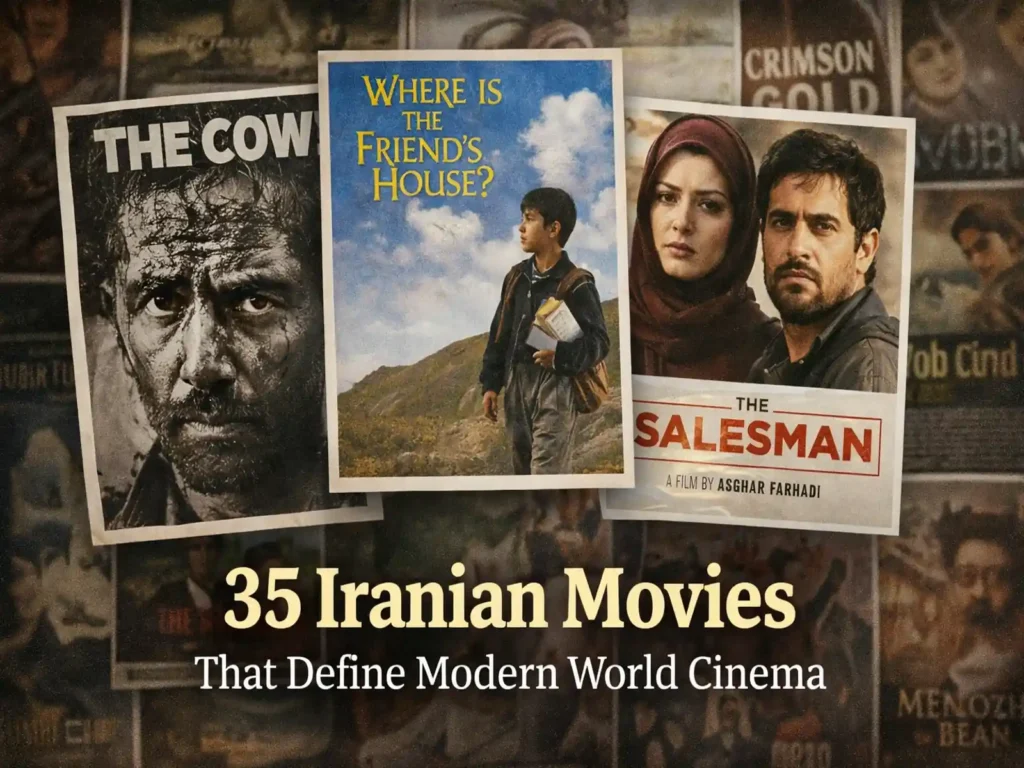
9. The Salesman (2016)
- Actors: Shahab Hosseini, Taraneh Alidoosti, Babak Karimi
- Director: Asghar Farhadi
- Genre: drama, thriller
- Tone: tense, morally complex, claustrophobic
- Suitable for: adults
- IMDb rating: 7.7/10
A couple rehearsing a play moves into a new apartment, and a violent incident fractures their shared sense of safety. The premise is domestic, but the story becomes a study of pride, vengeance, and what “justice” means inside a relationship. It explores how trauma changes the terms of intimacy and how public image can quietly steer private decisions. The emotional feel is gripping, with dread that comes from character, not spectacle. Short sentence: anger keeps growing. The pacing is tight, with scenes that feel like moral cross-examinations. It earns its place for refusing easy answers and for dramatizing the cost of retaliation. It’s best for viewers who want tense adult drama and can handle themes of assault and its aftermath.
8. The House Is Black (1963)
- Actors: Ebrahim Golestan (voice), Forugh Farrokhzad (narration), residents of Bababaghi
- Director: Forugh Farrokhzad
- Genre: documentary, short
- Tone: lyrical, stark, compassionate
- Suitable for: adults, film students
- IMDb rating: 7.8/10
A short documentary visits a leper colony and refuses to look away while also insisting on the dignity of the people filmed. The premise is observational, but the editing and voiceover give it the structure of a poem. It explores suffering and beauty in the same breath, challenging the viewer’s impulse to distance themselves. The emotional feel is haunting and strangely uplifting. Short sentence: every frame matters. The pacing is tight and purposeful, with no filler and no comfort padding. It earns its place for its historic influence and for showing how Iranian cinema’s lyric realism began early. It’s best for viewers ready for difficult imagery presented with compassion and artistic rigor.
7. The Cow (1969)
- Actors: Ezzatolah Entezami, Ali Nassirian, Jafar Vali
- Director: Dariush Mehrjui
- Genre: drama
- Tone: tragic, allegorical, haunting
- Suitable for: adults
- IMDb rating: 7.8/10
A villager’s identity is bound to his beloved cow, and when the animal disappears, the loss begins to rewrite reality. The premise reads like a folk tale, but the psychology is painfully grounded. It explores poverty, community pressure, and the strange bargains people make to avoid shame. The emotional feel is tragic, with moments that feel almost mythic. Short sentence: grief transforms him. The pacing is deliberate, letting the village’s collective denial become its own kind of violence. It earns its place as a cornerstone of Iranian New Wave cinema and a template for allegory that still cuts. It’s best for viewers who can handle dark themes and want a classic with lasting bite.
6. Fireworks Wednesday (2006)
- Actors: Hediyeh Tehrani, Taraneh Alidoosti, Hamid Farokhnezhad
- Director: Asghar Farhadi
- Genre: drama
- Tone: volatile, intimate, suspenseful
- Suitable for: teens, adults
- IMDb rating: 7.8/10
A young woman takes a housekeeping job and steps into the middle of a marriage cracking under suspicion. The premise unfolds over one charged day, while the city outside gears up for fireworks and noise. It explores jealousy, class, and how perception can act like evidence even when it’s wrong. The emotional feel is electric, like a spark waiting for oxygen. Short sentence: nerves are everywhere. The pacing escalates quickly, with Farhadi’s talent for turning small misunderstandings into major ruptures. It earns its place as an early showcase of the moral tension Farhadi would perfect later. It’s best for viewers who want a fast, tense domestic drama that feels like a thriller without genre tricks.
5. And Life Goes On (1992)
- Actors: Farhad Kheradmand, Pouya Payvar, Behrouz Abedini
- Director: Abbas Kiarostami
- Genre: drama
- Tone: reflective, humane, quietly hopeful
- Suitable for: teens, adults
- IMDb rating: 7.9/10
A director and his son travel back to an earthquake-struck region, searching for two child actors from a previous film. The premise is a simple search that becomes a road map of survival and stubborn normalcy. It explores resilience without romanticizing disaster, letting people speak and move at their own pace. The emotional feel is quietly hopeful, because life keeps happening between ruins. Short sentence: it’s gentle, not naive. The pacing is calm, built from encounters that feel discovered rather than engineered. It earns its place for showing how Kiarostami turns travel into a philosophy of attention. It’s best for viewers who want contemplative cinema and can enjoy meaning that grows from ordinary conversations.
4. About Elly (2009)
- Actors: Golshifteh Farahani, Shahab Hosseini, Taraneh Alidoosti
- Director: Asghar Farhadi
- Genre: drama, mystery
- Tone: tense, escalating, unsettling
- Suitable for: adults, older teens
- IMDb rating: 7.9/10
A seaside weekend with friends turns into panic when a guest disappears and the group’s polite surface starts to crack. The premise is simple, but the fallout becomes a social autopsy with no clean conclusions. It explores lying, saving face, and how a group can collectively choose the story that protects them most. The emotional feel is suffocating because everyone keeps talking while truth slips away. Short sentence: panic spreads quietly. The pacing becomes relentless once the disappearance hits, with scenes that feel like negotiations with reality. It earns its place for making manners feel like suspense and for its devastating portrait of communal self-deception. It’s best for viewers who love moral thrillers and can handle intense interpersonal conflict.
3. Close-Up (1990)
- Actors: Hossain Sabzian, Mohsen Makhmalbaf, Abolfazl Ahankhah
- Director: Abbas Kiarostami
- Genre: drama, docufiction
- Tone: intimate, curious, quietly devastating
- Suitable for: adults, film students
- IMDb rating: 8.2/10
A man is arrested for impersonating a famous filmmaker, and the real people involved reenact what happened around the real court case. The premise blurs documentary and fiction so smoothly that you start questioning what “truth” means on screen. It explores identity, class aspiration, and the hunger to be seen as an artist in a society that doesn’t always allow it. The emotional feel is compassionate, never mocking the man at the center. Short sentence: it’s deeply human. The pacing is patient, letting testimony and reenactment reveal character like layers of skin. It earns its place as one of the defining works of Iranian New Wave and a landmark of world cinema craft. It’s best for viewers who love meta-cinema and can sit with ambiguity and tenderness.
2. Children of Heaven (1997)
- Actors: Amir Farrokh Hashemian, Bahare Seddiqi, Mohammad Amir Naji
- Director: Majid Majidi
- Genre: drama, family
- Tone: heartfelt, suspenseful, uplifting
- Suitable for: families, older kids with parents
- IMDb rating: 8.2/10
A boy loses his sister’s shoes, and the siblings devise a plan to share one pair without their parents finding out. The premise turns a tiny crisis into a full-bodied adventure of dignity, love, and ingenuity. It explores poverty without shame and shows how childhood can carry adult responsibility with startling grace. The emotional feel is tender, and the suspense is real because the consequences matter to them. Short sentence: you root for every step. The pacing is brisk, building toward set pieces that feel thrilling because they’re emotional, not flashy. It earns its place for being universally accessible while still unmistakably rooted in Iranian social reality. It’s best for families and for anyone who wants a moving, cleanly told story that leaves you lighter.
1. A Separation (2011)
- Actors: Payman Maadi, Leila Hatami, Sareh Bayat
- Director: Asghar Farhadi
- Genre: drama, thriller
- Tone: tense, morally complex, relentless
- Suitable for: adults, older teens
- IMDb rating: 8.3/10
A couple’s decision about divorce and caregiving sparks a chain of events that pulls families, courts, and consciences into collision. The premise is domestic, but it plays like a legal thriller where every detail changes the verdict. It explores class, faith, pride, and truth as something people bend without always noticing they’re bending it. The emotional feel is suffocating because every character has a believable reason for what they do. Short sentence: the ground keeps shifting. The pacing is propulsive, and the screenplay keeps revealing new angles without feeling like a trick. It earns the top spot for combining precision craft with deep empathy and lasting relevance. It’s best for viewers who want a gripping, adult drama and can handle sustained tension and moral ambiguity.
Conclusion: revisiting Iranian movies
Use this list like a mood map: start with the warm family classics when you want emotional clarity, move to the Tehran-set dramas when you want suspense made from social pressure, and save the most contemplative works for nights when you can sit with silence. Many of these films get better on rewatch because their power hides in small choices—who speaks, who stays quiet, and what the camera refuses to show. If you want to go deeper, the Library of Congress film collections are a great place to learn how archives frame world cinema, and they can sharpen how you notice craft. Short sentence: look for what’s off-screen.
For a contemporary critical lens, it’s worth reading film coverage from a major US culture desk like The New York Times Movies section, then returning to the films with fresh questions about performance, editing, and moral design. Over time, you’ll start to recognize the distinct signature of Iranian New Wave techniques even in newer stories, and you’ll hear how Persian cinema keeps reinventing realism under pressure. When you’re unsure what to watch next, pick a director path—Farhadi for moral puzzles, Kiarostami for meditative form, Panahi for social portraits—and keep your comfort level in mind. These are films that reward attention. They also reward feeling.
FAQ about Iranian movies
Q1: Where should a beginner start with Iranian cinema?
Q2: What is ‘Iranian New Wave’ and why does it matter?
Q3: Are Iranian films always slow and minimalist?
Q4: Which Iranian movies work best for families?
Q5: What themes show up most often in Persian cinema?
Q6: How can I build a good double-bill from this list?