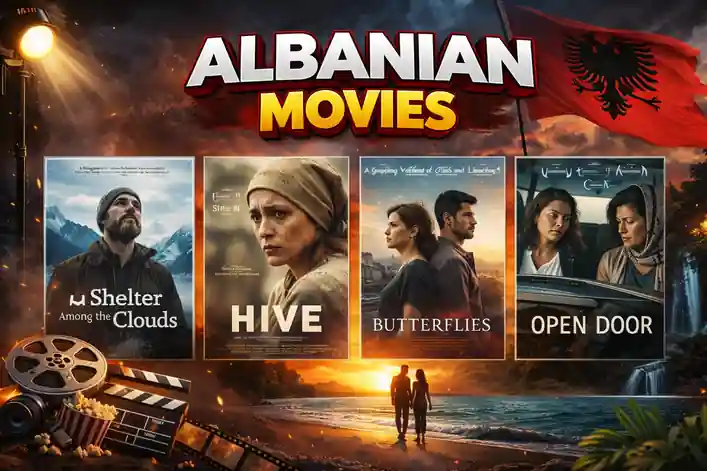
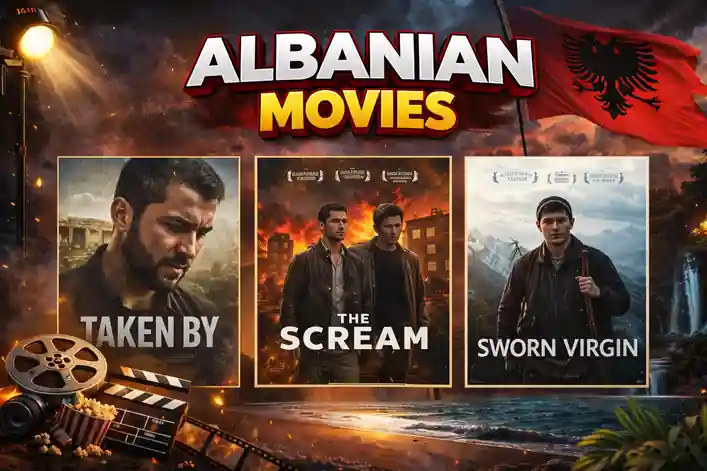
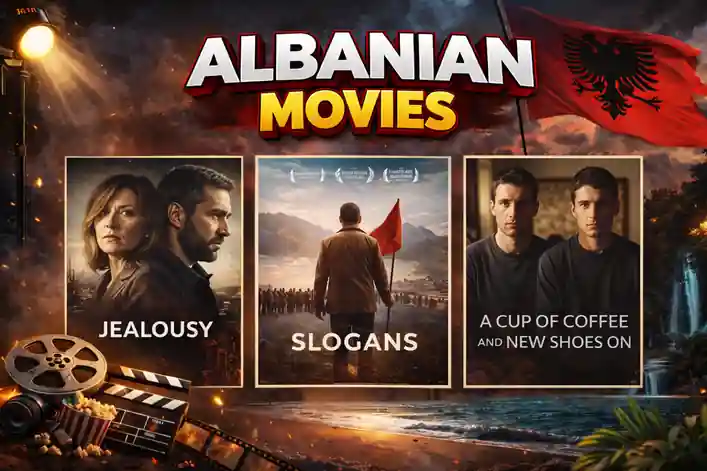
Albanian movies often turn landscape into pressure: mountain passes, port cities, and tight rooms where old rules still breathe. You can feel that push in Gjeneral gramafoni, in the village absurdity of Slogans, and in the communal grit of Hive. This cinema is known for plain-spoken realism, moral crossroads, and performances that hold tension without shouting. It returns to themes of honor, family duty, political fear, migration, and the quiet costs of survival. Kinostudio-era classics often speak in allegory and national myth, while later work leans into private lives and uneasy memory after the regime. The pacing tends to be patient, letting atmosphere do the work. Humor here is never decorative. When it arrives, it bites.
To make the journey easier, this guide maps eras and tones so you can pick a film that matches your mood and household comfort. Each entry gives a quick snapshot—year, director, genre, tone, suitability, and the current IMDb rating—so you don’t have to guess. Start with approachable dramas, then move toward heavier historical pieces as you build confidence. Newcomers can treat the lower half as an on-ramp, while cinephiles can jump straight to the canon. Think of it as a tour of Albanian-language films across decades, with room for both laughter and bruises. Some picks sit close to Balkan films in their realism, others lean into myth and ceremony. Short nights? Pick a lighter one. When you’re ready, climb higher.
How we picked these films
We built the lineup to reflect Albanian cinema across decades, from Kinostudio classics to contemporary stories with regional echoes. Viewer comfort mattered, so the list flags intensity where war trauma or political repression sits close to the surface. When two titles felt similar, craft and rewatch value broke the tie—especially performance, sound design, and the steady pull of post-communist drama. Only titles with an IMDb rating of 6.5/10 or above were considered, and the ranking climbs from the lowest qualifying rating at #25 to the highest at #1. All IMDb ratings in this article were verified on 20 February 2026.
25. The Delegation (2018)
- Actors: Viktor Zhusti, Xhevdet Ferri, Ndriçim Xhepa
- Director: Bujar Alimani
- Genre: drama, historical
- Tone: tense, quietly bleak
- Suitable for: adults, mature teens
- IMDb rating: 6.6/10
In 1990, a state official is dispatched to retrieve a political prisoner before foreign visitors arrive. The road trip becomes a test of loyalty as the regime’s logic crumbles around them. It explores complicity and dignity without turning anyone into a cartoon villain. The emotional feel is chilly, then suddenly intimate. Conversations do the damage. The pacing is patient, almost clinical, until the moral trap snaps shut. It belongs on this list because it captures how power speaks in paperwork and silences. Best for viewers who like tense Albanian movies with moral pressure rather than action.
24. Bota (2014)
- Actors: Flonja Kodheli, Alban Ukaj, Tinka Kurti
- Director: Iris Elezi; Thomas Logoreci
- Genre: drama
- Tone: intimate, melancholy
- Suitable for: teens, adults
- IMDb rating: 6.6/10
A young woman runs a modest café near a former internment camp where the past still leaks into daily life. A new relationship and a returning figure stir secrets the town would rather keep buried. It explores memory as something you inherit, not something you choose. The emotional feel is quiet grief mixed with stubborn hope. Small scenes carry everything. The film moves with restraint, letting each reveal arrive on its own time. It belongs here for the way it turns place into character and history into a living rumor. Best for viewers who want reflective drama and a low-to-moderate intensity watch.
23. East, West, East (Lindje, perëndim, lindje) (2009)
- Actors: Marjana Kondi, Tristan Halilaj, Astrit Kabashi
- Director: Gjergj Xhuvani
- Genre: comedy, drama
- Tone: bittersweet, wry
- Suitable for: teens, adults
- IMDb rating: 6.7/10
A traveling troupe tries to keep performing as the world around them shifts and the road keeps demanding compromises. Their routines become a way to process larger change without turning the film into a lecture. It explores dignity, survival, and the awkward comedy of trying to stay yourself while everything moves. The emotional feel is warm, then suddenly sharp. Funny, but not fluffy. The pacing is episodic, like life on tour, stacking small wins and small bruises. It belongs here for showing how laughter can coexist with economic anxiety and social change. Best for viewers who like human-scaled stories and a gentle, reflective tone.
22. The Marriage (2017)
- Actors: Alban Ukaj, Adriana Matoshi, Genc Salihu
- Director: Blerta Zeqiri
- Genre: drama
- Tone: intense, emotionally direct
- Suitable for: adults, mature teens
- IMDb rating: 6.8/10
On the eve of a wedding, a love triangle snaps into focus and turns celebration into confrontation. The premise is intimate, but the stakes widen quickly into family pressure and public scrutiny. It explores identity and desire as lived realities, not debate topics. The emotional feel is urgent, with tenderness and panic sharing the same room. No easy villains here. The film moves fast, building intensity through social pressure rather than spectacle. It belongs on this list for refusing euphemism while keeping empathy for everyone caught in the situation. Best for viewers ready for a serious relationship drama with high emotional heat.
21. The Forgiveness of Blood (2011)
- Actors: Tristan Halilaj, Refet Abazi, Sindi Laçej
- Director: Joshua Marston
- Genre: drama
- Tone: tense, humanist
- Suitable for: adults, mature teens
- IMDb rating: 6.8/10
A family is trapped after a killing triggers a blood feud, and daily life collapses into fear and negotiation. The story follows the children as they try to keep school and work alive within shrinking space. It explores tradition as a living force that can protect and destroy in the same breath. The emotional feel is anxious but compassionate, focused on ordinary resilience. You feel the walls closing. The pacing is steady, never sensational, letting inevitability do the frightening work. It belongs here for making a social code feel immediate, personal, and contemporary. Best for viewers who can handle sustained tension and heavy themes without graphic shocks.
20. Taulant Wants a Sister (Taulanti kërkon një motër) (1985)
- Actors: Eglantina Kume, Eva Alikaj, Bujar Kapexhiu
- Director: Xhanfise Keko
- Genre: family, drama
- Tone: gentle, affectionate
- Suitable for: families, older kids
- IMDb rating: 6.9/10
A child’s wish for a sibling becomes a small domestic story about attention, tenderness, and growing up. The premise is light, but the film treats feelings as serious business. It explores how jealousy and love can share the same sentence in a family. The emotional feel stays warm and open, with humor that never turns mean. Soft and sweet. The pacing is calm, letting daily rhythms and tiny misunderstandings do the storytelling. It belongs here for proving the cinema’s range beyond war and politics. Best for mixed households who want a kind, low-intensity classic.
19. Zana (2019)
- Actors: Adriana Matoshi, Alban Ukaj, Blerta Syla
- Director: Antoneta Kastrati
- Genre: drama
- Tone: raw, empathetic
- Suitable for: adults
- IMDb rating: 6.9/10
A woman in post-war Kosovo tries to become a mother while grief and trauma keep pushing back. Her search for help exposes how communities carry pain and how quickly patience can run out. It explores motherhood, memory, and survival without offering easy comfort. The emotional feel is physical, expressed in breath, posture, and silence. It hurts to watch. The film’s pacing is deliberate, letting each moment register before the next arrives. It belongs here for its fearless intimacy and the way it honors pain without exploiting it. Best for adults who can handle trauma themes and want a serious, cathartic drama.
18. Kapedani (The Captain) (1972)
- Actors: Sulejman Pitarka, Tinka Kurti, Pjetër Gjoka
- Director: Fehmi Hoshafi; Viktor Gjika
- Genre: comedy
- Tone: playful, satirical
- Suitable for: families, teens
- IMDb rating: 7.1/10
A stubborn patriarch clashes with changing social norms, and the household turns into a stage for generational comedy. The premise runs on pride, misunderstandings, and the gap between public posture and private reality. It explores modernization as something negotiated at the dinner table, not announced from a podium. The emotional feel is buoyant, with critique tucked inside the laughs. Genuinely funny stuff. The pacing is brisk, keeping scenes short and punchy before they wear out their welcome. It belongs on this list for its crowd-pleasing energy and its sly social observation. Best for viewers who want a lighter night and a classic satire with broad appeal.
17. Hive (2021)
- Actors: Yllka Gashi, Cun Lajçi, Aurita Agushi
- Director: Blerta Basholli
- Genre: drama
- Tone: resilient, quietly fierce
- Suitable for: teens, adults
- IMDb rating: 7.1/10
A widow in a small town starts a women-led business, and the decision sparks backlash as much as hope. The premise is straightforward, but the power sits in detail: whispers, work, and collective resolve. It explores dignity as something you build with your hands, day after day. The emotional feel is determined rather than sentimental, with anger held in check until it matters. Steel under quiet. The pacing stays steady, letting conflict escalate through community pressure instead of melodrama. It belongs here because it shows Albanian movies at their most grounded, urgent, and compassionate. Best for viewers who want inspiring realism with moderate intensity and strong performances.
Did you know that the most famous Albanian movies movie is:
Skanderbeg (1953) is widely treated as the reference point because it is an early, internationally visible epic built around Albania’s most mythic historical figure. Verified ticket-sales or viewership totals are not consistently published in accessible public records for this era, so the closest reliable proxy here is its IMDb footprint. As of 20 February 2026, the title shows an IMDb rating of 7.7/10 with 800+ user ratings, signalling unusually broad international awareness for a classic of this vintage. Those figures come from IMDb’s public rating and vote-count display for the film. Directed by Sergei Yutkevich and led by Akaki Khorava, with key roles for Besa Imami and Naim Frashëri, it plays as both drama and national myth. The story follows Skanderbeg’s rise and resistance, framing strategy and loyalty as the stakes of a larger struggle. It is famous for turning Albanian history into an epic screen language that travelled beyond local audiences early on. Internationally, it remains one of the most frequently cited Albanian historical features in festival and retrospective contexts. Right now, it is most reliably found via major rental platforms or archival circulation rather than a single always-on subscription home. A foundational epic, still felt.
16. Tomka and His Friends (1977)
- Actors: Enea Zheku, Zehrudin Dokle, Genc Mosho
- Director: Xhanfise Keko
- Genre: drama, war
- Tone: spirited, brave
- Suitable for: older kids with parents, teens
- IMDb rating: 7.3/10
A group of boys in wartime Berat turn play into resistance when occupying soldiers take over their town. The premise is kid-centered, yet the film respects their bravery and makes community the real hero. It explores friendship, ingenuity, and the moral clarity of small acts. The emotional feel is earnest, with bursts of humor and fear sharing the same street. Heartfelt and lively. The pacing is energetic, moving from neighborhood scenes to escalating stakes without losing warmth. It belongs here for balancing historical context with an adventure spirit that still plays today. Best for families and teens who want a classic with tension but not relentless darkness.
15. Time of the Comet (2008)
- Actors: Bujar Asqeriu, Rajmonda Bulku, Timo Flloko
- Director: Fatmir Koçi
- Genre: comedy, drama
- Tone: ironic, folkloric
- Suitable for: teens, adults
- IMDb rating: 7.3/10
A rare comet becomes a pretext for village anxieties, opportunism, and half-believed superstition. The premise plays with social roles—who leads, who flatters, and who quietly sees through the show. It explores power as theater, with neighbors as both audience and critics. The emotional feel is mischievous, then unexpectedly tender. Sly and playful. The pacing is episodic, stacking small incidents until the satire forms a clear picture of the community. It belongs here for its specifically local humor and its sharp sense of how myths get manufactured. Best for viewers who want cultural comedy with mild-to-moderate intensity.
14. Lamerica (1994)
- Actors: Enrico Lo Verso, Carmelo Di Mazzarelli, Michele Placido
- Director: Gianni Amelio
- Genre: drama
- Tone: stark, compassionate
- Suitable for: adults, mature teens
- IMDb rating: 7.4/10
Two Italians arrive in early-1990s Albania chasing profit, and quickly discover a country in upheaval and need. The premise is a moral trap where opportunism meets desperation face to face. It explores migration fantasies, dignity, and the aftershocks of collapsed systems. The emotional feel is compassionate but unsparing, never letting comfort win the argument. It lingers in the mind. The pacing is observational, letting situations speak rather than forcing melodrama. It belongs here for capturing a turning point that shaped how the region imagined the West and itself. Best for viewers interested in history and ethics who can handle bleak, realistic situations.
13. Slogans (2001)
- Actors: Artan Minarolli, Yllka Mujo, Mirush Kabashi
- Director: Gjergj Xhuvani
- Genre: drama, satire
- Tone: dry, absurdist
- Suitable for: teens, adults
- IMDb rating: 7.4/10
A teacher is posted to a remote village where school rituals are warped by ideological paranoia. The premise feels small, yet the absurdity keeps expanding until it becomes a portrait of a whole system. It explores conformity as both a survival skill and a moral injury. The emotional feel is comic dread, like laughter stuck in the throat. Sharp and strange. The pacing is controlled, letting jokes land while the unease deepens in the same beat. It belongs on this list for showing how language and fear can colonize ordinary life. Best for viewers who like political satire with a cool tone and a creeping edge.
12. The Silent Duel (Duel i heshtur) (1967)
- Actors: Ndrek Luca, Roland Trebicka, Timo Flloko
- Director: Dhimitër Anagnosti
- Genre: drama
- Tone: suspenseful, restrained
- Suitable for: teens, adults
- IMDb rating: 7.5/10
A quiet conflict simmers beneath ordinary routines, where loyalty and suspicion become a daily language. The premise is built on what’s hidden: motives, allegiances, and the betrayals that shift a community’s balance. It explores trust as a fragile contract, especially when politics is in the room. The emotional feel is cool on the surface, hot underneath. Tension without noise. The pacing is measured and precise, using silence as a weapon and patience as strategy. It belongs here for turning restraint into suspense and making small gestures feel dangerous. Best for viewers who enjoy slow-burn drama with psychological pressure and minimal spectacle.
11. The Uninvited (Të paftuarit) (1985)
- Actors: Vangjush Furxhi, Rajmonda Bulku, Piro Qirjo
- Director: Kujtim Çashku
- Genre: drama
- Tone: ominous, fatalistic
- Suitable for: adults, mature teens
- IMDb rating: 7.5/10
A newlywed couple travels into the northern mountains, where ancient blood-feud codes shape every encounter. The premise pairs romance with dread, making the landscape feel both beautiful and dangerous. It explores honor as a system that can outlive the people trapped inside it. The emotional feel is tense, with sudden quiet that sounds like warning. Haunting and hard-edged. The pacing is patient, then increasingly claustrophobic as the couple realizes how little control they have. It belongs here because it distills a cultural conflict into a story that plays like fate tightening its grip. Best for viewers who can handle anxiety-heavy drama and want a stark, atmospheric classic.
10. The Man of Earth (Njeriu prej dheu) (1984)
- Actors: Luan Jaha, Anisa Ismaili, Donat Qosja
- Director: Isa Qosja
- Genre: drama
- Tone: somber, reflective
- Suitable for: adults
- IMDb rating: 7.6/10
Far from home, a community wrestles with displacement and the pull of a remembered homeland. The premise centers on ordinary pressures—work, family, and the constant negotiation of identity. It explores exile as something that lives in habits, not headlines. The emotional feel is quiet ache rather than loud tragedy. Subtle, patient cinema. The pacing is deliberate, trusting the viewer to read between lines and sit with long emotional aftershocks. It belongs here for its serious, humane portrait of belonging and estrangement. Best for adults who like reflective drama and can lean into a slow, contemplative rhythm.
9. Skanderbeg (1953)
- Actors: Akaki Khorava, Besa Imami, Naim Frashëri
- Director: Sergei Yutkevich
- Genre: historical, drama
- Tone: epic, rousing
- Suitable for: teens, adults
- IMDb rating: 7.7/10
A national hero’s story becomes a widescreen saga of alliance, betrayal, and resistance. The premise follows Skanderbeg’s rise as he turns personal conviction into collective defiance. It explores sovereignty and sacrifice as matters of people, not just banners. The emotional feel is ceremonial, with a strong undercurrent of urgency. Big and earnest. The pacing is classical, moving between speeches, strategy, and set pieces that build mythic momentum. It belongs here because it helped define how Albania placed itself on screen for international audiences. Best for viewers in the mood for historical spectacle and a foundational national epic.
The Albanian movies is mostly famous for:
First, Albanian cinema is famous for social realism that treats ordinary life as the main battleground, even when the plot touches war or politics. A second hallmark is emotional directness delivered with restraint, where a single look can carry what a monologue never would. Historically, you can trace a line from Kinostudio-era allegory and collective narratives to the post-1990 turn toward private lives shaped by migration, disillusionment, and post-communist drama. The industry has often worked through limited resources, leaning on strong actors, location authenticity, and tight crews rather than expensive spectacle. Common genres include historical drama, social satire, and intimate family stories because they resonate with lived experience and shared memory. International visibility tends to come through festivals and critics, and the best of these films often travel as Balkan new wave discoveries for new audiences. Language and culture specificity are part of the appeal: the stories feel rooted, not “exported,” with humor and etiquette that read as local truth. Today, funding and distribution remain challenges, but digital circulation and regional co-productions are creating new routes to viewers, especially in Kosovo cinema. For newcomers, start with one modern crowd-connector, one sharp satire, and one canonical classic, then build mini-marathons by tone. With that approach, the next batch will land harder.
8. Face to Face (Ballë për ballë) (1979)
- Actors: Rajmonda Bulku, Timo Flloko, Bujar Lako
- Director: Kujtim Çashku
- Genre: drama
- Tone: tense, political
- Suitable for: teens, adults
- IMDb rating: 7.9/10
A translator on a naval base is caught between ideology and lived reality as international tension spills into local control. The premise plays like a chamber drama inside a larger geopolitical crack. It explores truth as something negotiated, especially when power is watching. The emotional feel is anxious, with suspicion hanging over every interaction. Taut and watchful. The pacing is controlled, turning small conversations into pressure points and silence into accusation. It belongs here for making politics personal without losing its sense of larger stakes. Best for viewers who like tense, talk-driven drama and can handle an atmosphere of suspicion.
7. A Tale from the Past (1987)
- Actors: Elvira Diamanti, Admir Sorra, Robert Ndrenika
- Director: Dhimitër Anagnosti
- Genre: comedy, historical
- Tone: lively, satirical
- Suitable for: teens, adults
- IMDb rating: 7.9/10
An arranged marriage sparks a chain of schemes, quarrels, and comic reversals in a world ruled by pride and gossip. The premise is pure storytelling fun, but the film keeps an eye on how power operates inside tradition. It explores agency and social performance with wit rather than preaching. The emotional feel is buoyant, with sharp edges that never cut too deep. Delightful and quick. The pacing is brisk, with scenes that play like timed sketches and never overstay. It belongs here for its rewatch value and its ability to criticize without turning bitter. Best for viewers who want a lighter classic and a smart, character-driven comedy.
6. Victory Over Death (Ngadhnjim mbi vdekjen) (1967)
- Actors: Naim Frashëri, Rikard Ljarja, Timo Flloko
- Director: Piro Milkani; Gëzim Erebara
- Genre: drama, war
- Tone: intense, resolute
- Suitable for: adults, mature teens
- IMDb rating: 8.0/10
During Nazi occupation, two young women are captured, and the story focuses on endurance under brutal pressure. The premise is direct and confrontational, insisting on the cost of resistance. It explores courage as an everyday decision made in unbearable circumstances. The emotional feel is grim, with flashes of defiance that keep the film upright. Hard but vital. The pacing is tight, keeping tension high even in quiet moments where fear is most visible. It belongs here as a landmark wartime drama that shaped how resistance stories were told on screen. Best for adults who can handle wartime violence themes and want serious, high-intensity drama.
5. And Comes a Day (Dhe vjen një ditë) (1986)
- Actors: Kadri Roshi, Reshat Arbana, Rajmonda Bulku
- Director: Vladimir Prifti
- Genre: drama
- Tone: sober, moral
- Suitable for: adults, mature teens
- IMDb rating: 8.0/10
A personal story unfolds in a society where reputation can be a sentence and silence can be protection. The premise stays grounded in relationships, letting pressure arrive in quiet increments rather than plot twists. It explores conscience, compromise, and the cost of staying decent when fear becomes routine. The emotional feel is serious but never theatrical, carried by subtle shifts in performance. It cuts deep. The pacing is measured, building moral tension through observation and careful framing. It belongs here for capturing a specific atmosphere of constraint with clarity and emotional honesty. Best for viewers who like thoughtful drama and can handle a sober, psychologically intense tone.
4. Red Poppies on Walls (Lulekuqet mbi mure) (1976)
- Actors: Ndrek Shkjezi, Eva Alikaj, Rikard Ljarja
- Director: Dhimitër Anagnosti
- Genre: drama
- Tone: poignant, earnest
- Suitable for: teens, adults
- IMDb rating: 8.1/10
A group of children experience a world shaped by adult conflict, and innocence becomes the story’s sharpest lens. The premise stays close to daily life—school, play, friendships—while history presses in from the edges. It explores resilience without turning the children into symbols or props. The emotional feel is tender, then suddenly serious when consequences arrive. Gentle, then piercing. The pacing is calm, allowing small moments to accumulate until the impact feels inevitable. It belongs among Albanian movies because it proves national stories can be told through small, humane details. Best for viewers who want a classic with strong feeling and moderate intensity.
3. The Second November (Nëntori i dytë) (1982)
- Actors: Sandër Prosi, Bujar Lako, Reshat Arbana
- Director: Viktor Gjika
- Genre: historical, drama
- Tone: dignified, stirring
- Suitable for: teens, adults
- IMDb rating: 8.7/10
The days leading to Albania’s declaration of independence become a focused historical drama about urgency and persuasion. The premise is political, yet the film keeps returning to personalities, debates, and the tension of decisions made under pressure. It explores unity as a fragile achievement rather than a guaranteed outcome. The emotional feel is solemn, with bursts of resolve that lift the room. Compelling and proud. The pacing is steady, building momentum through argument and conviction instead of spectacle. It belongs here for its landmark status in national historical storytelling and its commanding performances. Best for viewers who want prestige history with moderate intensity and a clear sense of stakes.
2. Freedom or Death (Liri a vdekje) (1979)
- Actors: Sandër Prosi, Naim Frashëri, Rikard Ljarja
- Director: Esat Musliu
- Genre: historical, drama
- Tone: rousing, serious
- Suitable for: teens, adults
- IMDb rating: 8.8/10
A national struggle is staged as a moral contest where ideals are tested against fear and betrayal. The premise centers on resistance and the permanent consequences of choosing sides. It explores solidarity as something forged under pressure, not declared in comfort. The emotional feel is earnest, built on conviction rather than irony. It means it. The pacing is purposeful, moving from personal stakes to collective action without losing clarity. It belongs near the top for its enduring prestige and its direct, rousing storytelling. Best for viewers in the mood for historical drama with a serious tone and moderate-to-high intensity.
1. The General Gramophone (Gjeneral gramafoni) (1978)
- Actors: Bujar Lako, Gulielm Radoja, Kadri Roshi
- Director: Viktor Gjika
- Genre: drama
- Tone: lyrical, defiant
- Suitable for: teens, adults
- IMDb rating: 8.9/10
A virtuoso clarinetist is pulled into the machinery of commerce and politics as foreign influence creeps in before war. The premise sounds simple, but it becomes a story about culture as both prize and weapon. It explores dignity and compromise through music, labor, and the lure of easy money. The emotional feel is proud, with a constant undertow of danger that never fully leaves. Music argues here. The pacing alternates between intimate character moments and broader social tension that keeps tightening. It belongs at #1 for its landmark reputation, its unforgettable musical energy, and its precise moral stakes. Best for viewers who want a top-tier classic that feels lyrical, tense, and deeply human.
Conclusion: revisiting Albanian movies
Use this list like three lanes: begin with approachable modern dramas when you want clean storytelling, move into the satirical middle when you want bite, then climb into the big classics when you’re ready for landmark scale. If you watch with friends or family, the suitability line is your guardrail, especially around war trauma and blood-feud tension. Over time, rewatch the top five and notice how often the same question returns in different voices—what do you owe to family, to community, and to yourself? That return is why Albanian movies reward repeat viewing, even when the settings and decades change.
For deeper context, it helps to think about film as cultural memory, not just entertainment. The Library of Congress National Film Registry is a useful model for how institutions describe screen heritage in plain language. For day-to-day criticism and viewing ideas, the The New York Times Movies section offers a steady stream of reviews and essays that can sharpen your own watching. Pair those reads with a few picks here, and you’ll start hearing the craft—performance, rhythm, and sound—more clearly.
FAQ about Albanian movies
Q1: Which is the most famous Albanian movies?
Q2: What are the essential starter titles if I’m new to Albanian movies?
Q3: Where can I stream Albanian movies legally?
Q4: What themes show up most often in Albanian movies?
Q5: Is Albanian movies more known for art-house cinema or mainstream hits?
Q6: How do you identify a true classic in Albanian movies?