
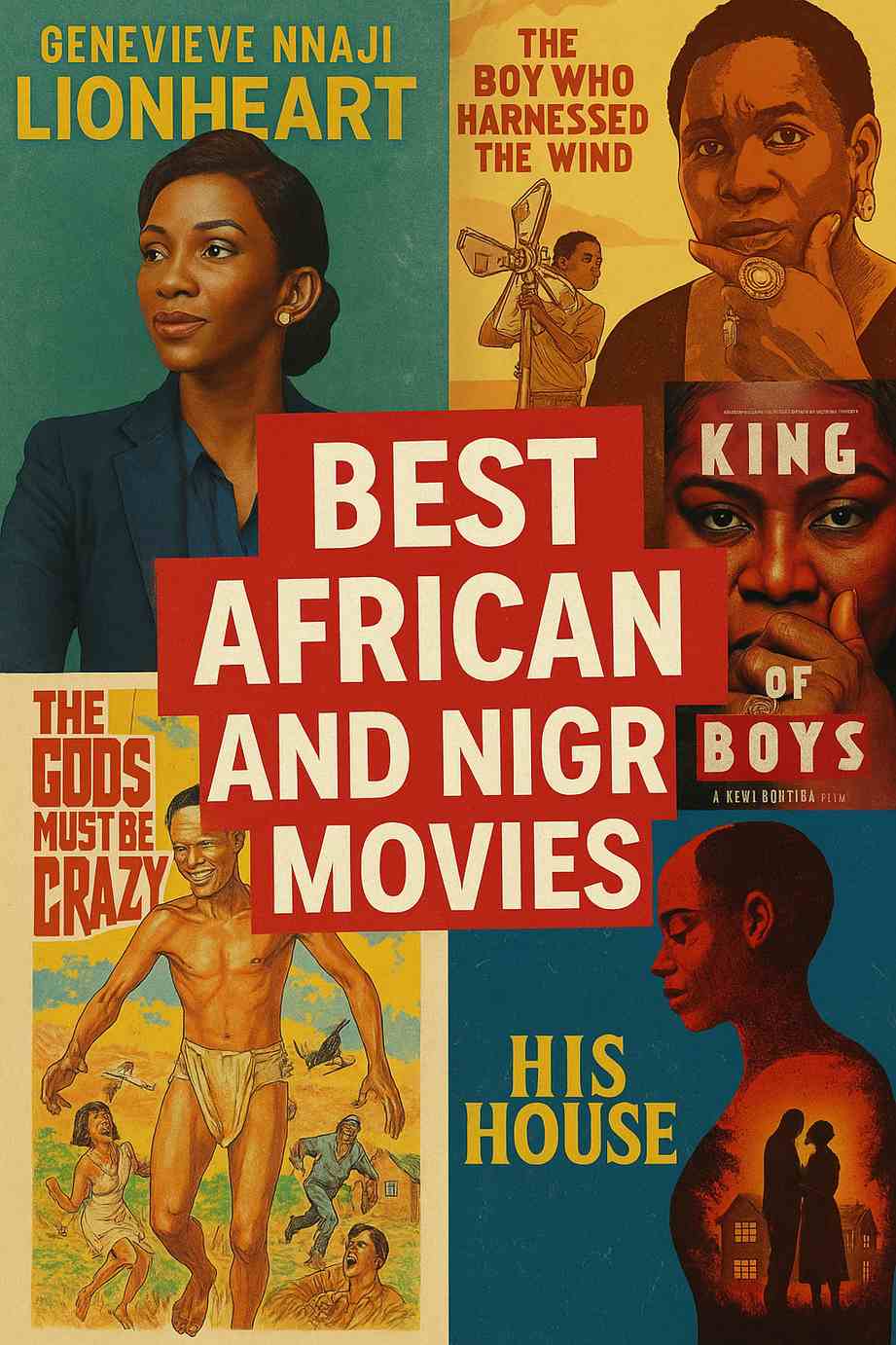
 From their earliest pioneers to today’s streaming hits, african and nigerian movies have turned the continent’s histories, languages and struggles into intimate, unforgettable stories. Across Lagos, Dakar, Johannesburg and beyond, filmmakers have used tiny budgets and huge imagination to explore colonial aftershocks, city hustle, spiritual journeys and the everyday comedy of family life, from October 1 and King of Boys to Tsotsi, Touki Bouki and The Battle of Algiers. You can feel the difference from one region to the next: the urgent political heat of North African dramas, the dreamy surrealism of Senegalese classics, the emotional punch of South African township stories and the punchy, dialogue-driven energy of Nollywood thrillers. These films stretch from black-and-white portraits of dock workers and domestic labour to neon-lit club scenes and cramped apartment blocks where borders, corruption and poverty are felt in every frame. Some titles here became festival sensations, others were word-of-mouth favourites passed around on DVDs and streaming recommendations, but together they sketch out a living map of African cinema in motion. Many of them circle around questions of power, faith and survival, yet they do so with warmth, humour and local detail that make even the heaviest subjects feel grounded in real lives. This is cinema that insists Africa is not a backdrop but the main character.
This guide is designed to help you move through that landscape without getting lost, whether you’re curious about classic African films or just want a gripping Friday-night thriller. The 24 picks below move between decades and regions, from the quiet heartbreak of Yesterday and Black Girl to the high-stakes suspense of District 9, Hotel Rwanda and the Nigerian Ebola drama 93 Days. Within the same list you’ll find festival darlings, Nollywood films that lit up multiplexes, and more experimental pieces that broaden what we think “African cinema” can be. Each entry gives you a quick snapshot of year, director, genre, emotional tone, suitability and IMDb rating, so you can decide whether something is right for a mixed-age family evening, a teens-and-up conversation starter or an adults-only watch. The idea is a flexible canon of African stories that still earn their place on “best of” lists while staying watchable on a weeknight, a living checklist you can return to over months instead of a homework assignment you have to tick off in order. This guide is meant to be a starting point you can grow from, one carefully chosen film night at a time.
How we picked this guide to african and nigerian movies
To build this list, we looked for a balance between regions, eras and tones, so that one evening you might discover an early Egyptian classic and the next a contemporary Nigerian cinema thriller. We prioritised stories that travel well across cultures while still feeling rooted in local realities, with a mix of intimate African drama films, political thrillers, love stories and character-driven tales that reward rewatching. Only titles with an IMDb rating of 6.0/10 or above were considered, and the final 24 are arranged from lower IMDb rating at #24 to higher IMDb rating at #1 so you can literally climb the ladder of viewer consensus. Every score listed below is taken directly from IMDb and uses a single decimal point for clarity, and all IMDb ratings in this article were verified on 12 December 2025. Alongside numbers, we also weighed cultural impact, critical reception and the way these films expand the picture of what African cinema and Nollywood films can be.
24. 93 Days (2016)
- Year: 2016
- Director: Steve Gukas
- Genre: drama, thriller
- Tone: tense, procedural, ultimately hopeful
- Suitable for: older teens and adults
- IMDb rating: 6.1/10
Set during the 2014 Ebola outbreak in Lagos, 93 Days follows doctors, nurses and public officials as they scramble to contain an invisible threat in one of the busiest cities in Africa. The story centres on real medical staff whose quick decisions and personal sacrifices kept a potential catastrophe from exploding across the continent. Much of the film unfolds inside hospital wards, offices and meeting rooms, so the drama comes from arguments, ethical dilemmas and the slow build of fear rather than jump scares or big action set pieces. The pacing is measured, letting you feel the weight of every test result and every choice made behind closed doors. A sombre colour palette and grounded performances keep things firmly in the realm of serious African drama films rather than disaster-movie spectacle. Content note: there are emotionally intense hospital scenes and death, but nothing graphic in terms of gore. It earns its place here as an example of how african and nigerian movies can turn recent history into a gripping, responsible thriller. Best for viewers who appreciate character-driven tension and are comfortable with medically themed stories.
23. Citation (2020)
- Year: 2020
- Director: Kunle Afolayan
- Genre: drama
- Tone: earnest, tense, empowering
- Suitable for: older teens and adults
- IMDb rating: 6.1/10
In Citation, a gifted postgraduate student accuses a celebrated professor of attempted sexual assault, setting off a campus-wide storm that tests loyalty, power structures and the meaning of justice. The film takes its time showing the informal hierarchies of university life in Nigeria, from cosy faculty dinners to whispered conversations in dorm rooms. Rather than leaning on courtroom theatrics, it builds its case through flashbacks, testimony and the subtle performances of lead actress Temi Otedola and her co-stars. Visually, it moves between lecture halls, coastal landscapes and tight interior spaces, with a warm colour palette that contrasts sharply with the chill of institutional indifference. The tone is intense but not relentlessly bleak, offering moments of friendship and solidarity as counterweights to the abuse-of-power storyline. Content note: the subject matter is heavy and includes discussions of sexual violence, but on-screen content is handled with restraint rather than explicit depiction. It stands out as one of the more accessible contemporary Nigerian cinema dramas that still digs into urgent social issues. Ideal for adults and mature teens ready to pause and discuss what they’ve just watched.
22. Half of a Yellow Sun (2013)
- Year: 2013
- Director: Biyi Bandele
- Genre: historical drama, romance
- Tone: sweeping, emotional, tragic
- Suitable for: adults
- IMDb rating: 6.1/10
Adapted from Chimamanda Ngozi Adichie’s novel, Half of a Yellow Sun follows two sisters as their comfortable lives are upended by the Biafran War in 1960s Nigeria. Their stories weave together love, ambition and politics, moving from university lecture theatres and stylish parties into refugee camps and battle-scarred villages. The film leans into melodrama at times, but its best moments come from quiet scenes where characters confront questions of identity, class and betrayal. Lush costume and production design give the early sequences the feel of a glamorous period piece before the war bleeds colour and security out of the frame. Pacing-wise, it covers a lot of ground, so you move briskly through years of events without getting bogged down in military detail. Content note: there are disturbing images of war, shootings and implied sexual violence, so this is firmly for adults rather than family viewing. As an adaptation, it has its compromises, yet it still offers a rare big-canvas look at Nigerian history told from African perspectives. Viewers who like multi-strand relationship dramas with historical stakes will find plenty to hold onto here.
21. King of Boys (2018)
- Year: 2018
- Director: Kemi Adetiba
- Genre: crime thriller, political drama
- Tone: operatic, gritty, suspenseful
- Suitable for: adults
- IMDb rating: 6.3/10
King of Boys drops you into the world of Lagos kingmakers, where one formidable woman straddles the line between philanthropist and feared crime boss. Sola Sobowale’s performance as Eniola Salami anchors the film, giving it the kind of larger-than-life protagonist you usually find in gangster epics from Hollywood or Hong Kong. The story moves between political offices, street corners and lavish parties, showing how money, loyalty and violence are woven together in contemporary Nigerian power structures. It runs long and dense, but that length lets supporting characters breathe and lets betrayals land with real sting. Stylistically, it leans into bold lighting, slow-motion and needle drops, embracing a heightened look that matches its moral stakes. Content note: expect strong language, brutal confrontations and some on-screen violence, making this strictly an adults-only entry. As a Nollywood representative on this list, it proves that african and nigerian movies can carry the weight of sprawling crime sagas without losing their local flavour. Best suited to viewers who love crime dramas and don’t mind a generous running time.
20. Isoken (2017)
- Year: 2017
- Director: Jadesola Osiberu
- Genre: romantic comedy, drama
- Tone: warm, funny, gently critical
- Suitable for: teens and adults
- IMDb rating: 6.4/10
Isoken follows a successful thirty-something woman whose family decides it’s past time she got married, leading to a tangle of expectations, culture clashes and romantic choices. What could have been a light sitcom instead becomes a nuanced look at class, diaspora relationships and what it means to satisfy yourself rather than just your community. Family dinners, weddings and workplace scenes provide a colourful backdrop, full of music, fashion and cross-cultural jokes that never quite tip into caricature. The tone stays buoyant, with strong comedic beats and affectionate teasing, but it also makes space for quieter moments where Isoken questions the life she’s been told to want. Pacing is brisk, making this one of the most easygoing entries on the list, perfect for viewers who might be wary of heavier dramas. As a piece of contemporary Nigerian cinema, it offers a useful counterbalance to crime and political stories by foregrounding love, friendship and personal growth. It is a smart pick when you want Nollywood films that can appeal to a wide age range without losing specificity. Ideal for mixed-age households comfortable with romantic themes and cultural debate around marriage.
19. October 1 (2014)
- Year: 2014
- Director: Kunle Afolayan
- Genre: crime thriller, period drama
- Tone: atmospheric, slow-burning, unsettling
- Suitable for: older teens and adults
- IMDb rating: 6.4/10
Set in the days leading up to Nigerian independence, October 1 follows a policeman sent from Lagos to a small town to investigate a string of murders targeting young women. The detective plot pulls you in quickly, but beneath it runs a story about colonial hangovers, ethnic tension and the psychological cost of Empire. Rich period details, from uniforms to village architecture, help immerse you in 1960, while the muted colour scheme reinforces the sense of a country on the edge of change. The pacing is deliberate, with long dialogue scenes and careful clue drops rather than constant action, so patient viewers are rewarded more than those looking for a quick genre fix. As it moves toward its conclusion, the tone darkens considerably and the film grips harder, forcing you to confront uncomfortable truths about violence and complicity. Content note: there are disturbing scenes and references to sexual assault and abuse, though graphic imagery is limited. It earns its place as one of the more ambitious african and nigerian movies to tackle history through the language of small-town noir. Best saved for viewers prepared for heavy subject matter wrapped in a detective story.
18. A Screaming Man (2010)
- Year: 2010
- Director: Mahamat-Saleh Haroun
- Genre: drama
- Tone: quiet, heartbreaking, contemplative
- Suitable for: adults
- IMDb rating: 6.7/10
In Chadian drama A Screaming Man, an ageing pool attendant at a luxury hotel is demoted just as civil war creeps closer to his city, straining his relationship with his son. The setup is small and domestic, but the film slowly lets political violence seep into the edges of everyday life until it becomes impossible to ignore. Haroun’s camera favours still frames and long takes, inviting you to sit with the character’s pride, shame and mounting fear. Colours are sun-bleached and the soundscape is sparse, amplifying every distant gunshot, radio bulletin and raised voice. The pacing is deliberately slow, sometimes almost trance-like, which makes late-film choices land with devastating force. There is little on-screen violence, yet the emotional stakes are among the highest on this list, and the final scenes linger long after the credits. It is a prime example of classic African films that convey political critique through intimate family tragedy rather than speeches. Best for viewers who appreciate quiet, slow-burning storytelling and are ready for an emotionally heavy evening.
Why african and nigerian movies travel so well across borders
By the time you reach the middle of this list, you’ve already moved from Nigerian hospitals and campuses to Chadian hotels and Senegal’s Atlantic coast. That range is what makes African cinema such a rewarding space for curious viewers, with African drama films, political thrillers and offbeat love stories sitting comfortably side by side. Many of these titles blend familiar genres with specific histories, so a viewer used to European art house or mainstream American thrillers still finds an entry point. At the same time, recurring threads like migration, community pressure and state power make the films feel like chapters in one sprawling continental story. As you continue, keep an eye on how Nollywood films and other regional industries borrow from each other while staying rooted in their own languages, landscapes and rhythms.
17. Atlantics (2019)
- Year: 2019
- Director: Mati Diop
- Genre: drama, supernatural romance
- Tone: dreamy, mournful, quietly eerie
- Suitable for: older teens and adults
- IMDb rating: 6.7/10
Set in Dakar, Atlantics begins as a social drama about construction workers who haven’t been paid and the young women who love them, then slowly drifts into ghost story territory. At its core is Ada, a bride-to-be haunted by the disappearance of her true love, who joined a group of men attempting a dangerous sea crossing. The film is rich in atmosphere rather than plot twists, using ocean horizons, neon-lit nightclubs and dim bedrooms to build a sense of longing and unease. Diop’s direction leans on repetition, music and gliding camera movements, giving the film a hypnotic, half-dreamed quality. Pacing is gentle, so this is not for viewers expecting jump scares or a tightly wound thriller but for those willing to let mood guide them. The supernatural elements work as a metaphor for unpaid debt, migration and unresolved grief, connecting very local details to global questions about inequality. As one of the more daring contemporary African cinema experiments, it stands out without being inaccessible. Recommended for viewers who like slow, atmospheric stories with a touch of the uncanny.
16. Xala (1975)
- Year: 1975
- Director: Ousmane Sembène
- Genre: satirical drama
- Tone: sardonic, political, quietly absurd
- Suitable for: adults
- IMDb rating: 6.7/10
Ousmane Sembène’s Xala skewers post-independence corruption through the story of a wealthy businessman who suddenly finds himself impotent on his wedding night with a much younger third wife. His literal curse echoes a broader spiritual paralysis, as the newly powerful elite replace colonial administrators without changing the systems that oppressed ordinary people. The film mixes broad comedy with razor-sharp social commentary, moving between boardrooms, markets and domestic interiors where servants watch the powerful flail. Visually, it’s a window into 1970s Dakar, with period fashion and architecture captured in unfussy but revealing compositions. The tone can feel deceptively light, yet the humiliation of the protagonist and the anger of those around him accumulate into a pointed critique. Pacing is brisk compared to some other classic African films, using short scenes and recurring gags to keep you engaged. It is an essential piece of African cinema history that still feels startlingly relevant in its view of greed and political theatre. Best suited to adults who enjoy satire and don’t mind laughing at characters who very much deserve their fate.
15. Rafiki (2018)
- Year: 2018
- Director: Wanuri Kahiu
- Genre: romantic drama
- Tone: tender, colourful, defiant
- Suitable for: older teens and adults
- IMDb rating: 6.8/10
Rafiki follows two young women in Nairobi whose fathers are political rivals, and who fall in love in a country where same-sex relationships are criminalised. Rather than shooting their world in grim tones, Kahiu fills the screen with saturated colours, pop music and street life, underlining the joy and youth that homophobia tries to crush. The story stays close to the girls’ perspective, showing gossiping neighbours, whispered conversations in church and the fragile pockets of privacy they carve out. Its pacing is relatively swift, moving through flirtation, discovery and consequence without indulging in excess melodrama. Content note: there are scenes of harassment and violence related to homophobia, but graphic imagery is limited and the focus remains on solidarity and resilience. As a Kenyan contribution to african and nigerian movies discourse, it broadens what family, love and belonging can look like on screen. Ideal for viewers comfortable with LGBTQ+ themes who want a mix of sweetness, political urgency and visual flair.
14. Difret (2014)
- Year: 2014
- Director: Zeresenay Berhane Mehari
- Genre: legal drama
- Tone: grounded, tense, quietly hopeful
- Suitable for: older teens and adults
- IMDb rating: 6.9/10
Based on a true story in Ethiopia, Difret follows a teenage girl who faces trial after shooting the man who abducted her for a traditional forced marriage, and the lawyer who takes on her case. Early scenes in rural villages and along dusty roads underscore how deeply embedded such practices are, while later courtroom and city sequences highlight the clash between custom and modern law. The film uses a straightforward visual style, with handheld shots and natural light giving it a documentary-like immediacy. Its pacing balances procedural beats with character moments, so you feel both the legal stakes and the personal cost for the families involved. Content note: the film deals with sexual violence, abduction and trauma, though most of it is implied rather than shown explicitly. As one of the more accessible African drama films on this list, it offers a powerful entry point into how law, tradition and gender intersect across the continent. Viewers who appreciate issue-based stories with clear narrative arcs will find it gripping and thought-provoking.
13. Yeelen (1987)
- Year: 1987
- Director: Souleymane Cissé
- Genre: mystical drama, fantasy
- Tone: mythic, measured, enigmatic
- Suitable for: adults and patient older teens
- IMDb rating: 6.9/10
Yeelen (meaning “brightness”) tells the story of a young man with magical gifts who flees his powerful father and journeys across Mali in search of guidance from his mother’s clan. The narrative draws on Bambara mythology, presenting a world where spiritual forces, ancestral power and natural landscapes are deeply intertwined. Cissé’s images are wide and patient, letting you take in deserts, forests and ritual spaces that feel both specific and timeless. Dialogue is sparse at times, with the film relying on music, gesture and carefully composed tableaux to create its mood. Pacing is slow and deliberate, making this one of the more challenging watches on the list for viewers unused to non-Western narrative rhythms. Yet its influence on later African cinema and on how filmmakers represent African spiritual traditions on screen is immense. For anyone serious about exploring the roots of classic African films beyond the usual festival titles, Yeelen is essential. Choose it on a night when you’re ready to sink into something hypnotic rather than chase quick thrills.
12. Eyimofe (This Is My Desire) (2020)
- Year: 2020
- Director: Arie Esiri, Chuko Esiri
- Genre: drama
- Tone: understated, humane, quietly devastating
- Suitable for: adults
- IMDb rating: 7.0/10
Eyimofe follows two separate but thematically linked stories in Lagos: a factory technician and a hairdresser, each trying to leave Nigeria for a supposedly better life abroad. Their paths never cross directly, yet shared spaces like markets, immigration offices and cramped apartments connect their experiences of hustle, disappointment and stubborn hope. Shot in textured, 16mm-style images with a focus on everyday detail, the film offers a portrait of contemporary Nigerian city life that feels lived-in rather than staged. The pacing is gentle but constant, following small obstacles and compromises rather than big plot twists, which makes its emotional climaxes feel startlingly real. Performances are low-key and natural, inviting you to lean in instead of signalling every feeling with big speeches. As one of the more recent african and nigerian movies to gain international festival attention, it proves that quiet stories can travel just as far as high-concept thrillers. Best for adults willing to spend time with characters whose dreams may not be neatly resolved. It also pairs well with Touki Bouki later in the list for a two-film mini-marathon on migration and restless youth.
11. Touki Bouki (1973)
- Year: 1973
- Director: Djibril Diop Mambéty
- Genre: drama, avant-garde
- Tone: playful, radical, bittersweet
- Suitable for: adults and adventurous older teens
- IMDb rating: 7.0/10
In Touki Bouki, a young couple in Dakar dream of leaving for Paris, hustling for money in increasingly reckless ways to escape what they see as a dead-end existence. Rather than telling their story in a straight line, Mambéty splinters time and tone, using jump cuts, repeated music cues and surreal imagery, including a motorbike adorned with cow horns. The result feels both steeped in 1970s Senegal and surprisingly modern, like an African cousin to the French New Wave. Pacing is elastic, swinging between quiet, observational scenes and bursts of anarchic energy that jolt you awake. The film’s rough edges and experimental flourishes can be disorienting at first, but they mirror the characters’ restless desire to be somewhere else. For viewers used to tidy narratives, this may feel like a challenge, yet it’s a cornerstone of African cinema that rewards anyone willing to go along for the ride. Watching it alongside more recent African drama films shows how long these questions of migration and belonging have been on screen. Choose it when you’re open to being surprised rather than comforted.
10. Timbuktu (2014)
- Year: 2014
- Director: Abderrahmane Sissako
- Genre: drama
- Tone: lyrical, sobering, quietly enraged
- Suitable for: older teens and adults
- IMDb rating: 7.1/10
Timbuktu portrays a Malian town under occupation by jihadist militants, focusing on a cattle herder and his family caught between everyday routines and arbitrary new rules. Sissako juxtaposes moments of absurdity, like a football game played without a ball, with moments of sharp brutality, creating a portrait of life under extremism that is rich in texture rather than propaganda. The film’s visual language is striking, with wide shots of desert landscapes and carefully framed interiors that give even small gestures a sense of weight. Dialogue blends Arabic, French, Bambara and other languages, reflecting the layered identities of the region. The pacing is deliberate, letting tension accumulate scene by scene until small acts of resistance and cruelty feel equally monumental. Content note: there are executions and scenes of harsh punishment, though the camera often looks away at the worst moments, focusing instead on faces and reactions. It stands as one of the most acclaimed contemporary African cinema works for its ability to humanise people often reduced to news headlines. Best for viewers ready to engage with difficult topics in a thoughtful, artful way.
9. Lumumba (2000)
- Year: 2000
- Director: Raoul Peck
- Genre: political biopic, historical drama
- Tone: urgent, analytical, tragic
- Suitable for: adults
- IMDb rating: 7.2/10
Raoul Peck’s Lumumba dramatises the brief, tumultuous political life of Patrice Lumumba, the first prime minister of an independent Congo, charting his rise, isolation and assassination. The film moves quickly through rallies, cabinet meetings and backroom negotiations, sketching how Cold War interests, Belgian colonial hangovers and internal rivalries converged against him. Peck combines archival touches with tightly staged dialogue scenes, making complex political manoeuvres understandable without sacrificing nuance. The pacing is brisk, more akin to a political thriller than a slow-paced biopic, which helps keep the stakes and timeline clear. Performances are strong across the board, grounding the big historical currents in recognisable human motives like pride, fear and ambition. Content note: while not excessively graphic, the film includes scenes of violence, imprisonment and execution that can be distressing. As part of this collection of african and nigerian movies, it broadens the notion of “African cinema” to include rigorously researched political storytelling. It’s best for viewers who enjoy history and are comfortable pausing afterward to read or talk more about what they’ve seen.
Discover african and nigerian movies for every mood and household
The final stretch of this list moves between intimate character pieces and full-scale political storms, giving you plenty of ways to tailor a film night. You’ll find African family movies that invite thoughtful conversation with older kids as well as adults-only titles that confront genocide, colonial violence or state repression head-on. Consider grouping two or three films at a time: perhaps a double bill of migration stories like Eyimofe and Touki Bouki, or an evening comparing city life in Lagos and Johannesburg via Nollywood films and South African dramas. The idea is not to “finish” the list in one go but to circle back, filling different gaps as your mood, company and energy level change. Think of it as a small but varied shelf you can reach for whenever you want to get out of your usual viewing habits without leaving the couch.
8. Tsotsi (2005)
- Year: 2005
- Director: Gavin Hood
- Genre: crime drama
- Tone: intense, redemptive, emotionally direct
- Suitable for: older teens and adults
- IMDb rating: 7.2/10
Set in a Johannesburg township, Tsotsi follows a young gang leader whose life changes after he carjacks a woman and discovers her baby in the back seat. The film tracks his uneasy attempts to care for the child while still running with his crew, forcing him to confront the violence and trauma that shaped him. Hood balances gritty, handheld sequences in cramped shacks with calmer scenes of domestic tenderness, making the contrast between Tsotsi’s two possible futures painfully clear. The pacing is tight, with high-stakes confrontations punctuated by quieter, wordless moments where actor Presley Chweneyagae carries whole scenes with his face. A pulsing Kwaito-inflected soundtrack anchors the story in its South African setting without overwhelming it. Content note: expect scenes of armed robbery, shootings and emotional abuse, though the focus is more on consequence than shock value. The film won an Academy Award for Best Foreign Language Film, and it remains one of the most widely seen African drama films worldwide. It’s a strong choice when you want a tough but ultimately hopeful story about second chances.
7. Black Girl (1966)
- Year: 1966
- Director: Ousmane Sembène
- Genre: drama
- Tone: stark, quietly furious, intimate
- Suitable for: adults
- IMDb rating: 7.4/10
In just under an hour, Sembène’s Black Girl tells the story of a young Senegalese woman who moves to France to work for a wealthy couple, only to find herself trapped in their apartment and stripped of dignity. The film’s simplicity is its strength: few locations, a small cast and a focus on everyday gestures like serving meals or cleaning rooms that gradually become suffocating. Shot in crisp black and white, it highlights the contrast between the glamour promised to the protagonist and the cramped reality she inhabits. Sembène uses voiceover to give us access to her thoughts, revealing how racism and exploitation gnaw away at her sense of self. The pacing is lean, with no wasted scenes, building an almost physical sense of entrapment as microaggressions pile up. Though made in the 1960s, its insights into domestic labour, migration and colonial hangovers feel unsettlingly current. As one of the foundational works of African cinema, it belongs on any serious list of african and nigerian movies worth studying and revisiting. Best watched by adults ready to engage with layered, uncomfortable social commentary.
6. Cairo Station (1958)
- Year: 1958
- Director: Youssef Chahine
- Genre: drama, thriller
- Tone: feverish, noir-tinged, socially aware
- Suitable for: adults
- IMDb rating: 7.5/10
Set almost entirely around a bustling railway station in Cairo, Chahine’s Cairo Station blends melodrama, thriller and social realism as it follows a disabled newspaper vendor obsessed with a drinks seller. The film paints the station as a microcosm of Egyptian society, with unions organising, lovers quarrelling and petty criminals scheming while trains thunder in and out. Chahine, who also plays the troubled lead, pushes the story toward a violent climax, using tight close-ups and dynamic camera work to heighten the sense of claustrophobia. The tone shifts from lively everyday portrait to dark psychological drama as jealousy curdles into something more dangerous. Pacing is brisk, with the bustle of passengers and vendors keeping the film in constant motion even when the action is contained in small corners and back rooms. Content note: themes of obsession, attempted sexual violence and murder make this best suited to adult viewers. It’s a key reminder that African cinema’s history stretches far beyond the sub-Saharan focus of many contemporary festival programmes. Choose it when you want a taut, old-school thriller with sharp social undercurrents.
5. Yesterday (2004)
- Year: 2004
- Director: Darrell Roodt
- Genre: drama
- Tone: gentle, heartbreaking, empathetic
- Suitable for: older kids, teens and adults
- IMDb rating: 7.5/10
Yesterday centres on a rural South African woman who discovers she is HIV-positive and must find a way to seek treatment while caring for her young daughter. The film unfolds with quiet patience, following her long walks to the clinic, awkward conversations with neighbours and the slow shift in her husband’s attitude. Roodt’s camera lingers on the landscapes of KwaZulu-Natal, using open skies and dusty roads to mirror the character’s isolation and determination. Performances are restrained rather than melodramatic, which makes the moments of emotional release all the more affecting. Pacing is gentle but purposeful, making this one of the more accessible African family movies for households with older children, provided they’re ready to discuss illness and stigma. There is no explicit content, though the subject matter is undeniably heavy and will likely spark questions. As a story about resilience in the face of systemic neglect, it quietly counters stereotypes about HIV and rural life in Africa. It’s a powerful choice when you want a film that can open up intergenerational conversations.
4. The Milkmaid (2020)
- Year: 2020
- Director: Desmond Ovbiagele
- Genre: drama, war
- Tone: tense, haunting, emotionally raw
- Suitable for: adults
- IMDb rating: 7.6/10
Inspired by the insurgency in north-eastern Nigeria, The Milkmaid follows two sisters whose lives are shattered when militants attack their village and carry them off into a world of forced marriage and indoctrination. The film explores how women navigate survival, faith and impossible choices in an environment where violence and ideology are tightly intertwined. Ovbiagele balances the brutality of the premise with moments of tenderness and solidarity between the women, making their humanity the centre of the story. Visually, the film is striking, using vivid colours and striking compositions to show both the beauty of the Sahel and the scars left by conflict. The pacing is steady but intense, with each new development upping the emotional stakes without tipping into exploitation. Content note: the film contains depictions of abduction, coercion and off-screen sexual violence, so it is strongly recommended for adults only. As one of the boldest recent contributions from Nigerian cinema, it shows how african and nigerian movies can confront extremism without losing sight of individual lives. Best for viewers who can handle tough material and want to go beyond headlines about Boko Haram to a more nuanced story.
3. District 9 (2009)
- Year: 2009
- Director: Neill Blomkamp
- Genre: science fiction, action
- Tone: kinetic, grimly funny, confrontational
- Suitable for: adults
- IMDb rating: 7.9/10
District 9 imagines a Johannesburg where a spaceship full of aliens has been parked over the city for decades, with its inhabitants confined to a slum-like camp policed by a private security firm. The story follows a bureaucrat tasked with relocating the aliens who becomes infected by their biotechnology, forcing him to confront the system he once served. Blomkamp blends documentary-style footage, news clips and traditional action filmmaking to create a world that feels disturbingly plausible despite its sci-fi premise. The pacing is fast and relentless, with chases, shootouts and body horror set-pieces that keep adrenaline levels high. Underneath the spectacle, the film is a pointed allegory for apartheid, xenophobia and the dehumanising logic of segregation. Content note: expect strong language, graphic violence and some disturbing transformation scenes, making this one of the most intense watches on the list. It shows how african and nigerian movies and stories from the continent can reshape global genres rather than simply playing within them. Perfect for viewers who like their social commentary served with explosions and dark humour.
2. Hotel Rwanda (2004)
- Year: 2004
- Director: Terry George
- Genre: historical drama, war
- Tone: harrowing, compassionate, suspenseful
- Suitable for: adults
- IMDb rating: 8.1/10
Based on real events during the 1994 genocide, Hotel Rwanda follows hotel manager Paul Rusesabagina as he shelters more than a thousand Tutsi refugees in his luxury hotel. The film keeps much of the violence off-screen, focusing instead on tense negotiations, bribes and desperate attempts to keep international attention from drifting away. Don Cheadle’s performance anchors the story, showing a man trying to protect his family and guests while confronting the limits of his influence. The pacing is relentless in its own way, as each new arrival, news bulletin or military visit tightens the noose around the hotel. A muted colour palette and careful use of music keep the focus on faces and small gestures rather than spectacle. Content note: while less graphic than some war films, the constant threat of massacre and glimpses of its aftermath make this emotionally heavy and firmly adults-only. It stands as one of the most widely recognised African-set films to break into mainstream global conversation. Best watched when you have the time and emotional bandwidth to sit with its questions afterward.
1. The Battle of Algiers (1966)
- Year: 1966
- Director: Gillo Pontecorvo
- Genre: war drama
- Tone: urgent, documentary-like, politically sharp
- Suitable for: adults
- IMDb rating: 8.1/10
The Battle of Algiers recreates the urban guerrilla warfare between Algerian independence fighters and French colonial forces in the late 1950s, shot in a style so realistic that it is often mistaken for documentary footage. Pontecorvo uses non-professional actors, handheld cameras and location shooting in the Casbah to immerse viewers in the rhythms of occupation, resistance and counterinsurgency. The film refuses to sentimentalise either side, showing bombings, torture and reprisals in stark, unsettling detail. Pacing alternates between long stretches of tension, political meetings and sudden bursts of violence, making you feel the stop-start rhythm of life under military rule. Its black-and-white photography and Ennio Morricone’s score create a sense of historical distance that paradoxically makes the events feel closer to ongoing struggles worldwide. Content note: scenes of torture, bomb attacks and civilian casualties are difficult to watch and unsuitable for younger viewers. As the highest-ranked title here, it represents the peak of politically engaged African cinema and continues to be studied by activists, scholars and even military strategists. Choose it when you’re ready for a dense, challenging watch that rewards attention and reflection.
Conclusion: returning to african and nigerian movies as a living playlist
Taken together, these 24 african and nigerian movies offer a sweeping tour of the continent’s cinematic imagination, from dusty Sahel villages and Lagos backstreets to Algerian rooftops and South African townships. You’ve seen family sagas and courtroom battles, mystical journeys and science-fiction allegories, all rooted in specific histories but open enough to speak across borders. The idea is not that this list is final or complete, but that it gives you a sturdy skeleton on which to hang your own discoveries, from tiny festival gems to mainstream Nollywood hits your friends recommend.
As you circle back through the list, you might start grouping titles by theme—migration, political betrayal, women resisting patriarchal power—or by region, building your own mini-seasons at home. If you want to dig deeper into the academic side of African cinema, resources like the University of Chicago’s African Cinema research guide are a useful starting point for understanding how scholars frame these works within history and theory. For a more journalistic perspective, pairing these films with long-form criticism and interviews in major culture sections can help you see how reviewers situate them within global film conversations, from festival buzz to streaming debates. The more angles you explore, the richer each rewatch becomes.
Ultimately, the best way to use this list is as a flexible playlist rather than a checklist, dipping into lighter fare like Isoken on some nights and saving the weight of Hotel Rwanda or The Battle of Algiers for when you feel ready. Over time, african and nigerian movies can become part of your regular rotation rather than a special “world cinema” occasion, expanding how your household thinks about story, place and history. This is cinema designed not just to entertain but to rearrange how you see the world, one carefully chosen evening at a time.
FAQ about african and nigerian movies
Q1: Where should I start if I am new to african and nigerian movies?
Q2: Which titles on this list are most suitable for family viewing with older kids?
Q3: Do I need to know a lot about African history before watching these films?
Q4: How can I find more African cinema beyond this list?
Q5: Are all African films as heavy as the genocide and war stories mentioned here?
Q6: Why does this list combine films from across the continent with Nigerian titles in one place?

Get Weekly Highlights
Curated stories + editor’s picks. Zero fluff.