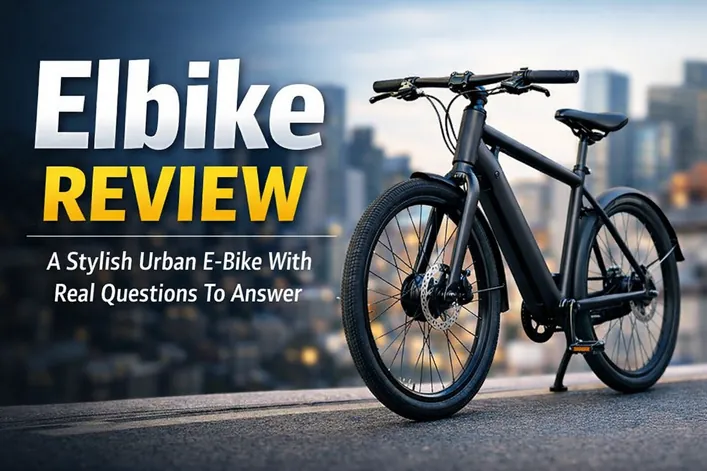
There are plenty of electric bicycles that try to win people over with numbers, but far fewer try to win them over with restraint. Elbike – the most beautiful affordable electric bike arrived with a very specific promise: a clean, elegant city bicycle that happened to be electric, rather than an electric machine awkwardly pretending to be a bicycle. That distinction matters. It is the difference between designing for daily life and designing for spec-sheet shock. Years later, what still makes this bike interesting is not just its crowdfunding origin or its visual polish, but the fact that it tried to solve a genuine problem in the market. Too many budget e-bikes looked heavy, overbuilt, and visually confused. Elbike wanted to look normal, feel approachable, and cost less than the premium design brands. That was a smart idea then, and it remains a smart idea now. The real question is whether the bike itself was strong enough to back up the pitch.
What the Product Is
Elbike – the most beautiful affordable electric bike was conceived as a stripped-back urban electric bicycle for riders who wanted subtle assistance without the usual visual baggage. It was positioned as a city commuter first, not a trail bike, not a cargo tool, and not a brute-force performance machine. The concept was straightforward: keep the form light, keep the silhouette clean, integrate the battery as neatly as possible, and deliver enough assist to make everyday riding easier without turning the whole experience into a small motorcycle. That framing matters because it defines how the bike should be judged. It was never meant to dominate every type of ride. It was meant to make a narrow category of riding feel better, cleaner, and more stylish.
That narrow focus is also what gave the bike its editorial appeal. A lot of crowdfunded tech products fail because they try to be all things to all people. Elbike did something more disciplined. It offered an urban commuter e-bike with a minimalist profile and a friendlier price narrative. In market terms, that gave it identity. In real-world terms, it also created limits that buyers needed to understand before getting carried away by the imagery.
First Impressions
The strongest first impression of Elbike – the most beautiful affordable electric bike is visual confidence. It does not have the clumsy geometry or swollen proportions that often define lower-cost e-bikes. Instead, it presents itself like a stylish city bicycle with hidden advantages. That matters more than some brands admit. Many people who are curious about electric bikes are not only buying transportation; they are also buying an object that will sit in an apartment hallway, outside a workplace, beside a café table, or locked near a train station. Appearance is not a superficial extra in that context. It is part of usability. A bicycle that feels attractive, compact, and dignified is easier to live with.
But the second impression is more measured. Once the design has done its job, practical questions begin to surface. How strong is the motor in real traffic? How capable is the setup on hills? What happens when the appealing simplicity of a single-speed e-bike meets less-than-ideal city terrain? These are not minor details. They are the difference between a bike that feels effortlessly refined and one that feels slightly underpowered the moment conditions stop being ideal. That tension sits at the center of the whole review.
Key Features and Specifications in Real-World Terms
On paper, Elbike – the most beautiful affordable electric bike offered the kind of specifications that made sense for a design-led city machine. Launch-era details pointed to a 250W front hub motor, a removable 36V battery, disc brakes, an estimated weight around 17 kilograms depending on configuration, and claimed range figures that were attractive for light urban riding. None of those numbers sound outrageous today, but the important part is what they mean on the road. A 250W hub motor can be absolutely fine for urban use, especially in flatter cities, yet it usually delivers help rather than drama. You feel support, not violence. That can be a virtue if your goal is a smooth and civilized ride rather than instant acceleration.
The battery and range claims deserve a similarly sober reading. Claimed maximum range is one thing; everyday range is another. Weather, rider weight, route profile, assist level, and stop-start traffic all have a say. In a gentle urban commute with moderate assist, the bike’s numbers were believable enough to sound practical. In harder use, the real-world result was always going to come down. That is not a scandal. It is just the truth of electric bike ownership. The smart way to read those figures is not as a guarantee, but as a window into the bike’s intended character: short to mid-distance city mobility rather than endless power-assisted exploration.
Design, Build, and Usability
This is where Elbike – the most beautiful affordable electric bike earns its best praise. It understood earlier than many rivals that good design is not a luxury feature. On a city bike, design is part of the product’s value. The frame was shaped to look clean and contemporary rather than mechanical and overcomplicated. The overall look suggested a lightweight e-bike you would actually want to be seen with, which cannot be said for a lot of budget competition from the same period. That visual discipline helped the project stand out in media coverage because it felt less like a gadget campaign and more like a legitimate bicycle idea.
Usability, however, is where the admiration needs qualification. A simple layout, integrated battery solution, and uncluttered interface can make daily riding feel pleasantly low-friction. Yet minimalist bicycle design has a habit of turning every omission into a philosophy. Fewer visible components can look elegant, but riders still need comfort, stability, serviceability, and confidence. If the road surface is rough, the weather is poor, or the commute is hillier than expected, simplicity can stop feeling elegant and start feeling narrow. That does not mean the design is flawed. It means the design is honest about who it serves best.
Who It Is For
The ideal owner of Elbike – the most beautiful affordable electric bike is easy to picture. This is a rider who spends most of their time on paved city streets, values style as much as specifications, and wants a bike that fits into everyday life without bringing too much visual or mechanical drama. It suits someone who likes the feeling of riding a real bicycle and wants assistance to flatten effort, not replace it. It is also a better fit for people with modest commuting distances and a taste for neat, unobtrusive design. The bike makes the most sense in cities where beauty and practicality can coexist without too much conflict from steep hills or rough infrastructure.
It is less compelling for riders who need a utility machine, who regularly climb hard gradients, or who want a more powerful response at traffic lights. If your priorities are cargo carrying, broad dealer support, rugged comfort, or stronger all-purpose ability, this style of machine can feel charming but incomplete. The same clean logic that makes it attractive also limits its range of talents. That is the trade-off with many single-speed e-bike ideas: they work wonderfully in the right environment and feel compromised in the wrong one.
Comparison With Key Competitors
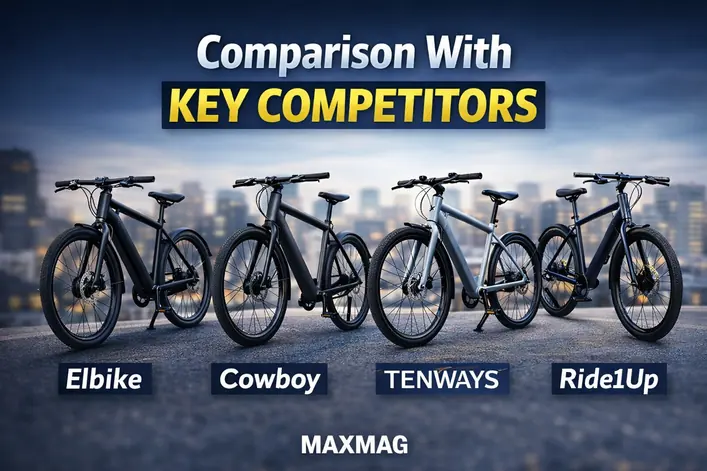
Placed beside current rivals, Elbike – the most beautiful affordable electric bike looks a bit like an early statement of a category that later became mainstream. Today’s urban commuter e-bike market is full of bicycles that hide their electric nature more neatly, offer stronger software integration, and come backed by more mature after-sales infrastructure. Brands in the modern design-led commuter space have refined the formula with better sensors, cleaner power delivery, more polished security features, and in some cases more confidence on mixed terrain. That does not erase what Elbike got right. It highlights how correct its core instinct was.
The difference is that newer competitors tend to feel more complete. They still care about stealth, clean lines, and low visual clutter, but they also arrive with broader product maturity. Better service networks, clearer certification, more transparent warranty structures, and stronger real-world testing make a major difference. Elbike’s place in that comparison is interesting rather than dominant. It helped point toward a direction the market would later validate, but it does not automatically beat the bikes that came after it.
Comparison Table
| Bike | Main character | Motor approach | Best use case | Strength | Main concern |
|---|---|---|---|---|---|
| Elbike | Minimalist city commuter | Modest urban assist | Flat to mixed city riding | Design and low visual clutter | Questions around long-term ownership confidence |
| Cowboy-style premium commuter | Connected urban e-bike | Smoother, more advanced integration | Tech-forward city riders | Refined ecosystem | Higher price |
| TENWAYS-style lightweight commuter | Modern stealth commuter | Contemporary sensor-led assist | Daily city use | Balanced modern execution | Less distinctive personality |
| Ride1Up-style value performance bike | Faster value pick | Stronger punch and speed focus | Riders wanting more output | Performance for money | Less elegant visual restraint |
How the Media and Public Reaction Framed It
What is striking about the outside reaction to Elbike – the most beautiful affordable electric bike is how consistent it was. Design-focused publications liked the look. Electric bike media appreciated the lightweight, stealthy city-bike angle. Broader commentary treated the project as a sign that buyers were ready for affordable e-bikes that did not look cheap. Community discussion, meanwhile, was more cautious and arguably more useful. Enthusiasm was often paired with questions about torque, hill performance, delivery timing, and the long-term reality of support. That split between admiration and caution is exactly what a sensible reader should want. It suggests the bike was neither dismissed nor blindly celebrated.
In editorial terms, that is often a good sign. Products worth discussing tend to trigger two responses at once: desire and doubt. Elbike had enough charm to generate interest and enough uncertainty to prevent lazy praise. The media did not treat it as a joke, which already says something positive. But neither did practical concerns disappear just because the bike photographed well. That tension is part of the product’s identity.
What It Gets Right
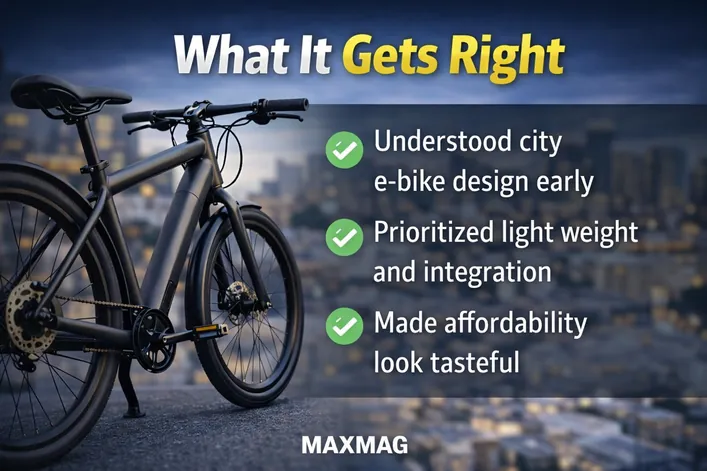
If there is one reason Elbike – the most beautiful affordable electric bike still deserves attention, it is because it understood the emotional side of urban mobility. It recognized that a commuter bike is not just transport. It is part of the rhythm of a person’s day. That is why low weight matters. That is why a calm silhouette matters. That is why a bike that looks desirable without looking aggressive can matter more than another sheet full of inflated promises. Elbike’s best idea was not the motor or the battery. Its best idea was that an affordable electric bike could still feel tasteful.
It also got the basic brief right. The product did not pretend to be a mountain bike for the city, nor did it drown itself in novelty features. It pursued a coherent identity: everyday, elegant, assisted transport. Even if one argues that later brands executed the category more completely, there is real value in being early with the correct instinct. Many products are remembered because they were first to articulate what consumers wanted before consumers fully knew how to describe it.
Where It Still Has to Prove Itself
The hardest truth about Elbike – the most beautiful affordable electric bike is that beauty does not remove the normal risks attached to crowdfunding e-bike projects. A bike can look finished in photographs while the ownership ecosystem is still uncertain. Questions around long-term service, parts, support, and fulfillment matter more with mobility products than with most design gadgets, because the user is not just buying an object. They are buying trust. If anything fails, the consequences are practical and immediate. That is why the cautious voices around this bike were not being cynical. They were being realistic.
Performance limits also deserve honesty. Riders in flatter cities may find the assist perfectly acceptable. Riders facing steeper climbs or heavier daily demands may not. A modest setup can feel charming in an ideal environment and slightly strained in a tougher one. If you want a bike that handles a broad spread of conditions with ease, the concept begins to show its edges. That does not make it a bad bike. It makes it a bike whose success depends heavily on the fit between product and rider.
Pricing and Value for Money
At launch, Elbike – the most beautiful affordable electric bike made its boldest argument through price. The appeal was obvious: a stylish, relatively light, city-oriented e-bike that cost less than the premium design names and looked more refined than many lower-cost alternatives. In pure positioning terms, that was clever. It gave buyers a way to imagine stepping into the world of electric urban cycling without either settling for something visually clumsy or paying luxury-brand money. For a while, that promise alone was enough to make the bike feel unusually persuasive.
But value is never just the sticker price. Real value includes the confidence of ownership, the quality of support, and the sense that the product remains dependable after the launch campaign stops being exciting. On that front, the equation becomes more complicated. A lower entry point is attractive, but it matters less if the rider begins worrying about long-term service, performance headroom, or whether the bike fits a broader range of daily needs. Seen that way, the bike’s value proposition is strongest when judged as a design-led city machine for a very specific kind of owner, not as a universally smart buy.
Buy It If / Skip It If
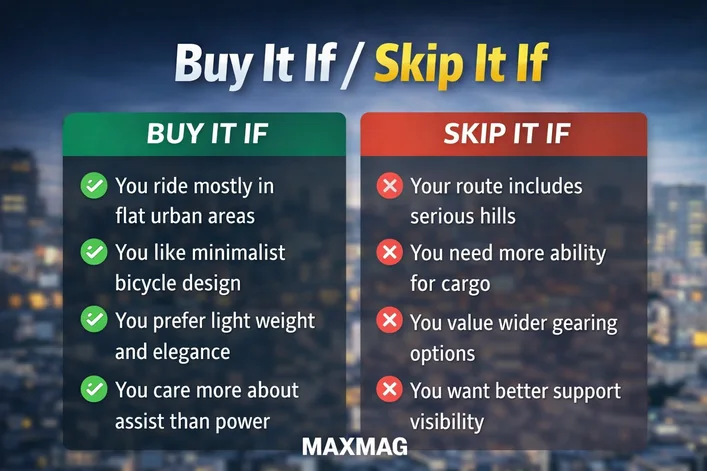
You should lean toward Elbike – the most beautiful affordable electric bike if your priorities are clear and fairly narrow. Buy it if you live in a flatter city, appreciate subtle aesthetics, want a lightweight e-bike that feels closer to a normal bicycle, and care about design enough to make it part of the purchase decision. Buy it if the idea of a tidy, simple, stylish urban companion appeals to you more than the idea of maximum power or maximum versatility.
Skip it if you need one bike to do everything. Skip it if your roads are steep, your expectations are utility-driven, or your comfort zone depends on large support networks and proven long-term ownership systems. Also skip it if you are the kind of rider who tends to discover new use cases after purchase. Bikes with narrowly elegant briefs are often rewarding when they match your life and frustrating when they do not.
Final Verdict
Elbike – the most beautiful affordable electric bike is most interesting today not as a miracle machine, but as a smart early expression of where urban e-bike design was heading. It understood that many riders did not want an electric bicycle that looked like a compromise. They wanted something visually calm, practical enough for city life, and financially reachable. In that sense, the bike was genuinely perceptive. It identified a market desire that later brands would chase more aggressively and more successfully.
That said, admiration should not become overstatement. The bike’s elegance, price ambition, and city-friendly concept deserve credit, but the unresolved questions are part of the product too. Performance beyond the ideal use case, support confidence, and the usual uncertainty surrounding crowdfunding all sit in the same frame as the attractive design. That is why the fairest conclusion is neither hype nor dismissal. Elbike was a good idea, an appealing object, and a compelling editorial case study. It was also a reminder that a beautiful commuter is not automatically a complete answer to real-world electric bike ownership.
In the end, Elbike – the most beautiful affordable electric bike feels like a product that saw the future clearly, even if it did not fully control every practical detail needed to own that future. For some riders, that would have been enough. For others, it would have been the beginning of more questions than the launch images suggested. Either way, it remains memorable for a reason: it made the affordable electric bike conversation look sharper, cleaner, and a little more grown up.