

Best French Films of All Time: 24 Essential Picks

December 10, 2025

Searching for the best french films of all time can feel oddly stressful when you finally collapse on the sofa. You scroll through endless rows of thumbnails, juggling the tastes of kids, teens and adults, while wondering which titles are legendary but secretly exhausting. Some nights you crave the warmth and colour of classic French cinema, other nights you want something sharper, closer to today’s world and its tensions. You may have heard about French New Wave movies or seen the same few posters over and over, but still feel unsure which one will actually work for tonight. Add in questions about subtitles, pacing and content, and the stakes for a simple movie night suddenly feel higher than they should. You want films that are rich and memorable without feeling like homework after a long day. You want stories that everyone in the room can connect to, whether they lean toward French comedies, French drama films or something in between. This guide is designed to do exactly that.

Think of this list as a flexible viewing map rather than a rigid canon you must march through. You can start at number 24 and walk your way up to number 1, or jump around based on mood, era, genre or who is watching with you. Each entry gives you a quick sense of tone, emotional intensity and age suitability, so you can see at a glance whether a film fits a Sunday afternoon with older kids, a school-night treat, or a late-night slot for adults only. That way, French romantic films, family-friendly French films and tougher social dramas all find their proper place in your week instead of blending into one intimidating pile. Use the list to build double bills, experiment with themed world-cinema nights, or slowly tick through these French films that often feature on “best of all time” lists while still feeling accessible. Over time, it becomes a living checklist you can return to whenever the streaming menus start to blur together. You are not chasing someone else’s idea of perfection, just curating reliable, watchable choices for your own home. That is the real goal here.

How we picked the best french films of all time

To build this list, we looked for a balance between critical acclaim, cultural impact and genuine watchability on a weeknight. That meant mixing black-and-white landmarks with modern festival hits, and weaving together classic French cinema, French New Wave movies and contemporary crowd-pleasers. We paid close attention to tone and intensity so you can avoid accidentally picking something unbearably grim when you just wanted a gentle midweek escape. We also tried to keep different life stages and sensitivities in mind, highlighting which titles work better as family-friendly French films and which belong firmly in the adults-only corner. Finally, we favoured movies that reward rewatching, so your favourites can grow with you rather than feeling like one-and-done obligations.

24. The Red Balloon (1956)

  • Year: 1956
  • Director: Albert Lamorisse
  • Genre: Fantasy, family
  • Tone: Gentle, whimsical, bittersweet
  • Suitable for: Whole family, including younger children

In a quiet corner of post-war Paris, a young boy finds a bright red balloon that seems to have a mind of its own. Their wordless friendship turns the grey streets into a playground, as the balloon follows him through schoolyards and stairwells. The story taps into childhood loneliness and the thrill of finding a companion who simply understands you, without lectures or conditions. It also hints at how fragile that magic can be when the wider world notices something different and decides to crush it. The pacing is simple and unhurried, making it ideal for viewers who appreciate visual storytelling over fast dialogue. Its short running time and gentle tone mean even very young children can follow along without fear of heavy themes. For many, it serves as a poetic doorway into French cinema more broadly. Families looking for a first step into subtitled films will find this a tender, low-stress starting point.

23. The Triplets of Belleville (2003)

  • Year: 2003
  • Director: Sylvain Chomet
  • Genre: Animation, comedy
  • Tone: Surreal, darkly funny, eccentric
  • Suitable for: Older kids, teens and adults who enjoy quirky animation

This animated adventure follows a devoted grandmother who crosses the ocean to rescue her kidnapped cyclist grandson, teaming up with a trio of bizarre former music-hall stars. The film barely uses dialogue, relying instead on visual gags, exaggerated character design and a jazzy score to tell its story. Beneath the oddball humour, it gently mocks consumer culture, organised crime and the sometimes absurd world of elite sports. The style is distinctly handmade, full of elongated limbs, smoky clubs and exaggerated cityscapes that feel like a fever dream of classic French cinema and American noir. Some sequences are strange or slightly macabre, so it is better suited to older children and teens than very young viewers. The pacing alternates between quiet character moments and wild chases, keeping things engaging without ever feeling chaotic. Anyone who likes their animated films a bit offbeat will find this a memorable, rewatchable gem.

22. Tomboy (2011)

  • Year: 2011
  • Director: Céline Sciamma
  • Genre: Drama
  • Tone: Intimate, tender, observational
  • Suitable for: Older kids, teens, adults comfortable with identity themes

Set over one luminous summer, this story follows a ten-year-old who introduces themself as a boy to the kids in a new neighbourhood. The camera stays close to the child’s point of view, capturing games, crushes and small humiliations with extraordinary sensitivity. At its heart, the film explores questions of identity, belonging and the unspoken rules that govern childhood friendships. It feels less like a message-driven drama and more like an honest diary of what it means to test new versions of yourself when the adults are not looking. The pacing is gentle and observational, allowing small glances and gestures to carry emotional weight. There are moments of tension and heartbreak, but no graphic content, making it suitable for thoughtful older children and teens with parental guidance. Sciamma’s direction connects it to a wider tradition of French drama films about adolescence. Families and viewers who appreciate quiet, character-driven stories will find it quietly powerful.

21. The Class (Entre les murs) (2008)

  • Year: 2008
  • Director: Laurent Cantet
  • Genre: Drama
  • Tone: Realistic, intense, talkative
  • Suitable for: Teens and adults, especially educators and parents

Based on a teacher’s own novel, this film takes place almost entirely within a single Parisian classroom over one school year. At first, lessons unfold with familiar friction as a well-meaning teacher tries to inspire a lively, diverse group of teenagers. As minor conflicts escalate, the story exposes how cultural differences, bureaucratic rules and personal pride clash in everyday education. It portrays both students and teachers as flawed, complicated people rather than heroes or villains, making the debates feel painfully authentic. The film is largely built from rapid-fire dialogue and long scenes, so it rewards viewers who enjoy talky, realistic drama. There is some strong language and emotionally tough confrontations but little graphic content. Its focus on institutional pressures connects it to a strand of French New Wave movies and later social dramas that probe power and inequality. Parents, teachers and older teens will likely see their own classrooms reflected on screen.

20. The Intouchables (2011)

  • Year: 2011
  • Director: Olivier Nakache, Éric Toledano
  • Genre: Comedy-drama
  • Tone: Uplifting, funny, emotional
  • Suitable for: Teens and adults

Inspired by a true story, this blockbuster pairs a wealthy quadriplegic aristocrat with a caregiver from a rougher neighbourhood who is initially just looking for a signature to prove he applied for work. Their unlikely partnership slowly becomes a friendship, built on dark jokes, shared music and a refusal to treat disability as a tragedy. The film leans into feel-good moments but also acknowledges class divides, racism and the awkwardness of intimate care. Its humour is broad yet grounded, making it accessible to viewers who might shy away from subtitled films. The pacing is smooth and upbeat, alternating party scenes, tender conversations and fish-out-of-water gags. Some jokes and language are rougher around the edges, so it is best suited to teens and adults rather than younger children. For many, it offers a bridge between mainstream Hollywood sensibilities and the warmth of French comedies. It works particularly well for mixed-age groups who want something moving but not crushingly heavy.

19. Persepolis (2007)

  • Year: 2007
  • Director: Marjane Satrapi, Vincent Paronnaud
  • Genre: Animation, biography, drama
  • Tone: Wry, poignant, political
  • Suitable for: Older teens and adults

Adapted from Marjane Satrapi’s graphic novel, this animated film traces her coming-of-age during and after the Iranian Revolution, partly from exile in Europe. The black-and-white drawings create a striking contrast between childhood imagination and the harshness of political upheaval. Humour and anger sit side by side as she navigates punk music, strict schools and a sense of never fully belonging anywhere. While much of the story is rooted in Iran, the scenes set in France highlight the cultural negotiations faced by immigrants and outsiders. The pacing moves briskly through years and continents, yet keeps returning to intimate family moments. There are depictions of violence, war and personal trauma, which makes it more suitable for mature viewers. Its blend of personal memoir and political history connects it to the more adventurous side of classic French cinema. Adults and older teens who like animation that takes big themes seriously will find it essential viewing.

18. La Belle et la Bête (1946)

  • Year: 1946
  • Director: Jean Cocteau
  • Genre: Fantasy, romance
  • Tone: Lyrical, dreamlike, gothic
  • Suitable for: Older kids, teens and adults comfortable with eerie imagery

Jean Cocteau’s adaptation of the Beauty and the Beast tale transforms a familiar story into a shimmering black-and-white dream. Gliding candelabras, living statues and slow-motion entrances make the Beast’s castle feel like a haunted theatre stage. At the centre is the evolving relationship between Belle, initially frightened and dutiful, and the Beast, whose anguish and vulnerability slowly surface beneath his monstrous exterior. The film meditates on desire, sacrifice and the masks we wear for one another, themes that remain surprisingly modern. Its deliberate pacing, with long shots and theatrical gestures, rewards patient viewers who enjoy visual poetry more than quick-cut action. Younger children may find some images frightening, but older kids and teens can appreciate its fairy-tale strangeness. The movie stands as a bridge between classic French cinema and the later fantasy traditions that drew inspiration from it. It is ideal for a quiet, atmospheric evening when you want something enchanted rather than loud.

Why these French classics still resonate today

By the time you reach this point in the list, you have already crossed from childhood fantasies to sharp contemporary dramas and lyrical fairy tales. That sweep of styles shows how classic French cinema and more modern French drama films often wrestle with the same questions about class, identity and belonging. Even when the fashions, cars or city skylines change, the emotional currents of friendship, first love, fear and hope feel instantly recognisable. These films also offer a different rhythm from Hollywood, inviting you to sit with silence, glances and pauses rather than constant plot twists. As you move into the next group of titles, you will see how that tradition adapts to new eras, new technologies and new audiences without losing its distinctive voice.

17. Delicatessen (1991)

  • Year: 1991
  • Director: Jean-Pierre Jeunet, Marc Caro
  • Genre: Dark comedy, fantasy
  • Tone: Grotesque, inventive, offbeat
  • Suitable for: Adults comfortable with dark humour and violence

Set in a crumbling apartment block after an unspecified disaster, this film follows a former clown who moves into a building run by a butcher with sinister sideline business. The tenants are a gallery of oddballs, each with their own desperate survival strategies and quirks. Amid the grime and threat, a delicate romance grows between the newcomer and the butcher’s shy daughter. The film uses exaggerated sets, intricate sound design and visual gags to create a world that feels like a comic book brought to life. Its pacing alternates between slow, eerie build-ups and sudden bursts of chaos, so it works best when you are ready to give it your full attention. Content note: there are scenes of implied cannibalism and violence that are not suitable for sensitive viewers. The film links to the more eccentric side of French comedies and genre experiments. Fans of Tim Burton or Terry Gilliam will likely feel at home in its twisted, colourful universe.

16. The Young Girls of Rochefort (1967)

  • Year: 1967
  • Director: Jacques Demy
  • Genre: Musical, romance
  • Tone: Joyful, colourful, wistful
  • Suitable for: Whole family, especially fans of musicals

This sun-drenched musical follows twin sisters in a seaside town who dream of escaping to Paris and finding great love and artistic success. A travelling fair, a visiting American musician and a swirl of coincidences create a tapestry of missed connections and near encounters. The sets and costumes burst with candy-coloured pastels, while the songs glide between playful and bittersweet. Beneath the glitter, there is a gentle melancholy about time passing and chances maybe slipping away. The film’s pacing is light and buoyant, perfect for viewers looking for an upbeat entry point into French cinema. Dialogue and lyrics bounce quickly, but the emotions are simple enough for older children to follow. It connects neatly to other French romantic films and even sits comfortably next to Hollywood classics like Singin’ in the Rain. Families or musical fans wanting something exuberant yet slightly nostalgic will find it irresistible.

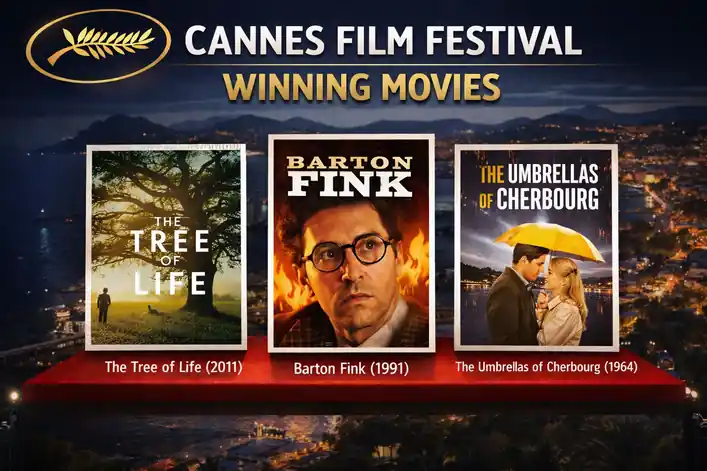
15. The Umbrellas of Cherbourg (1964)

  • Year: 1964
  • Director: Jacques Demy
  • Genre: Musical, romance, drama
  • Tone: Lush, romantic, bittersweet
  • Suitable for: Teens and adults who enjoy melodic storytelling

In this entirely sung-through musical, a young couple in a small coastal town is separated when he is drafted for military service, and every everyday conversation becomes part of a flowing score. The colours are almost impossibly vivid, with pinks, blues and greens saturating every shopfront and umbrella. On the surface, it looks like pure romance, yet the story quietly tracks how practical decisions, family pressure and fear of the future shape a love story’s fate. Rather than focusing on big twists, the film lingers on small emotional pivots, like letters delayed or conversations avoided. The pacing is steady and melodic, rewarding viewers who can relax into the music and let the lyrics carry the plot. While there is no explicit content, the emotional complexity makes it better suited to teens and adults than very young children. Over time, it has become a key reference point for both French romantic films and international directors. Anyone who loves musicals with a bittersweet edge will likely add it to their personal favourites.

14. Cléo from 5 to 7 (1962)

  • Year: 1962
  • Director: Agnès Varda
  • Genre: Drama
  • Tone: Reflective, restless, intimate
  • Suitable for: Teens and adults

Taking place in almost real time, this film follows a young singer wandering through Paris while she waits for medical test results that could change her life. At first, she seems vain and self-absorbed, surrounded by mirrors and admirers. As the minutes pass, the city’s streets, cafés and parks become a backdrop for her slow awakening to other people’s stories and struggles. The movie touches on themes of mortality, gender expectations and what it means to be truly seen. Its pacing is gentle but never static, riding on the energy of the city and the flow of conversations. There is little explicit content, but the emotional stakes and philosophical questions make it more suitable for mature viewers. Varda’s perspective enriches the tradition of French New Wave movies with a distinctly female gaze. Viewers who enjoy character studies and strolling through cities on screen will find it quietly hypnotic.

13. The Diving Bell and the Butterfly (2007)

  • Year: 2007
  • Director: Julian Schnabel
  • Genre: Biography, drama
  • Tone: Poetic, introspective, moving
  • Suitable for: Adults

Based on the memoir of Jean-Dominique Bauby, this film begins after a massive stroke leaves him almost completely paralysed, able to communicate only by blinking one eye. The camera places you inside his restricted field of vision, forcing you to share his frustration, fear and flashes of hope. Through memories and fantasies, we see his former life as a successful magazine editor and the relationships he took for granted. The story becomes a meditation on identity, dignity and the meaning of freedom when the body no longer cooperates. Pacing alternates between intense, confined present-day scenes and more fluid, dreamlike recollections. Some hospital moments and emotional confrontations can be heavy, so it is best for adults ready for a thoughtful, serious experience. Its stylistic daring links it to classic French cinema while also reflecting international art-house influences. Anyone interested in stories of resilience and creativity under extreme constraint will find it unforgettable.

12. A Prophet (Un prophète) (2009)

  • Year: 2009
  • Director: Jacques Audiard
  • Genre: Crime, drama
  • Tone: Gritty, tense, immersive
  • Suitable for: Adults only

This prison drama follows Malik, a young man of North African origin who arrives in jail illiterate, alone and seemingly powerless. Forced into working for a Corsican gang that runs much of the prison, he slowly learns how to navigate and manipulate the system. The film becomes both a crime saga and a sharp look at race, power and survival in contemporary France. Violence is present but never glamorised, emphasising consequence rather than coolness. The pacing is deliberate, drawing you into the rhythms of prison life and the incremental shifts in loyalty and status. Content note: it includes strong language, brutal violence and scenes of intense psychological pressure. Its ambition and richness place it firmly in the tradition of modern French drama films that also speak to global audiences. Viewers who appreciate complex character arcs in crime stories will find it gripping and thought-provoking.

11. Blue Is the Warmest Colour (2013)

  • Year: 2013
  • Director: Abdellatif Kechiche
  • Genre: Romance, drama
  • Tone: Intense, intimate, raw
  • Suitable for: Adults only

This three-hour romance follows Adèle from teenage years into early adulthood as she falls fiercely in love with Emma, an older art student with blue hair and a confidence she finds magnetic. The film immerses you in everyday textures, from crowded school corridors to messy dinners and shared cigarettes. At its core, it traces how first love can be both transformative and destructive, especially when external prejudices and internal doubts collide. The camera stays close to faces, making small shifts in expression feel huge. Pacing is unhurried, allowing arguments, reconciliations and quiet domestic moments to unfold in full. Content note: it includes explicit sex scenes and emotionally intense confrontations, which firmly place it in adult territory. For many viewers and critics, it has become a reference point in discussions of the best french films of all time that explore queer relationships. Adults interested in immersive, character-driven love stories will find it demanding but deeply affecting.

10. Breathless (À bout de souffle) (1960)

  • Year: 1960
  • Director: Jean-Luc Godard
  • Genre: Crime, drama
  • Tone: Cool, restless, experimental
  • Suitable for: Teens and adults

Godard’s breakthrough film follows a small-time car thief on the run in Paris and his love affair with an American student who may or may not betray him. Shot on the streets with lightweight cameras, it shattered conventional rules about editing, storytelling and how dialogue could drift and meander. The film’s jump cuts, direct addresses to the camera and jazz-infused mood felt rebellious in 1960 and still carry a spark now. Rather than focusing on a tight plot, it revels in youthful bravado, flirtation and a sense that life might end at any moment. The pacing shifts between languid apartment scenes and sudden bursts of movement through the city. There is some violence and frequent smoking, but less graphic content than many modern crime films. Its influence on French New Wave movies and global cinema is hard to overstate. Film lovers who want to understand why certain classics keep being referenced in discussions of the best french films of all time should start here.

9. The 400 Blows (Les Quatre Cents Coups) (1959)

  • Year: 1959
  • Director: François Truffaut
  • Genre: Drama
  • Tone: Tender, melancholic, rebellious
  • Suitable for: Older kids, teens and adults

Truffaut’s semi-autobiographical debut follows Antoine, a Parisian boy who feels misunderstood at home and punished at school, drifting into petty delinquency. The camera treats him with empathy rather than judgement, capturing the thrill of playing truant alongside the ache of being dismissed by adults. Scenes of cramped apartments, cinema visits and nighttime escapades create a vivid portrait of working-class childhood. The film explores how institutions meant to protect children can sometimes trap them instead. Pacing is measured but never dull, built from small, telling details instead of big dramatic twists. There is some mild language and emotional distress, yet nothing graphically violent, making it accessible to thoughtful older kids and teens. The final image, freezing Antoine mid-run, has become one of the iconic shots in classic French cinema. Anyone interested in why coming-of-age stories dominate lists of the best french films of all time will find a foundational example here.

Discover more great French films for every mood

The remaining titles move across decades and styles, from gritty urban dramas to playful comedies and intricate period pieces. Together they show how French comedies, French New Wave movies and solemn historical epics can all share a sharp eye for character. You will find films that spark long conversations, others that simply leave you smiling, and some that quietly sit with you for days afterward. Use this stretch of the list to build mini-marathons, pairing a heavier drama with something lighter or matching two films that explore similar themes from different angles. Whatever combination you choose, you will keep discovering new corners of French cinema.

8. Amour (2012)

  • Year: 2012
  • Director: Michael Haneke
  • Genre: Drama
  • Tone: Quiet, devastating, compassionate
  • Suitable for: Adults only

This intimate drama centres on an elderly couple, both retired music teachers, whose peaceful life is shattered when the wife suffers a stroke. The film stays almost entirely inside their apartment, watching how love, duty and exhaustion shape the husband’s attempts to care for her as her condition worsens. Small domestic details become heartbreakingly significant, from closing a window to helping her into a chair. Rather than offering easy uplift, the story confronts ageing, decline and the limits of even the deepest devotion. The pacing is slow and deliberate, demanding patience and emotional readiness. Content note: some scenes of physical deterioration and despair can be very hard to watch. Its honesty and formal control have led many critics to place it among the best french films of all time. Mature viewers looking for a serious, emotionally challenging film about long-term love will find it unforgettable.

7. La Haine (1995)

  • Year: 1995
  • Director: Mathieu Kassovitz
  • Genre: Drama, crime
  • Tone: Tense, urgent, politically charged
  • Suitable for: Older teens and adults

Shot in stark black and white, this film follows three young men from a Parisian banlieue over 24 hours after a night of riots sparked by police brutality. As they wander the city, joking, arguing and clashing with authority, the camera tracks both their bravado and their vulnerability. The script captures the rhythms of street talk while exposing the structural inequalities that shape their lives. Violence always feels close, even when nothing is happening, creating a constant low-level dread. Pacing is tight but not frantic, with quiet rooftop conversations offset by sudden confrontations. Strong language and scenes of threat make it unsuitable for younger viewers. Its mix of style and social commentary has secured its place in debates about the best french films of all time, especially those tackling race and class. Viewers interested in politically engaged cinema will find it both gripping and thought-provoking.

6. Amélie (Le Fabuleux Destin d’Amélie Poulain) (2001)

  • Year: 2001
  • Director: Jean-Pierre Jeunet
  • Genre: Romantic comedy
  • Tone: Whimsical, sweet, playful
  • Suitable for: Older kids, teens and adults

Set in a postcard-perfect version of Montmartre, this film follows Amélie, a shy waitress who secretly engineers small acts of kindness and mischief for the people around her. The narration, saturated colours and quirky visual tricks create a world where even the simplest gestures feel magical. At its heart, the story is about loneliness, courage and the decision to step out of hiding and take emotional risks. The supporting characters, from a reclusive painter to a hypochondriac tobacconist, give the film a bustling, storybook texture. Pacing is lively, with quick montages and playful detours that never lose track of the central romance. There is some mild sexual humour and innuendo, but little that would trouble older children and teens. Its charm and accessibility have helped cement its status in many informal lists of the best french films of all time. Anyone looking for a feel-good entry point into French cinema will find it hard to resist.

5. Au revoir les enfants (1987)

  • Year: 1987
  • Director: Louis Malle
  • Genre: War drama
  • Tone: Gentle, haunting, tragic
  • Suitable for: Older kids, teens and adults

Drawing on his own childhood, Louis Malle tells the story of a French boarding school during World War II where the headmaster quietly hides Jewish boys among the pupils. The film focuses on the friendship between Julien, a restless student, and Jean, a new arrival whose secrets he slowly uncovers. Everyday routines of lessons, games and teasing unfold alongside small hints of danger creeping closer. The story is told from a child’s perspective, which makes the final betrayal and its consequences all the more shattering. Pacing is measured, allowing you to settle into the school’s rhythms before events take a darker turn. There is little onscreen violence, but the emotional impact of the ending can be very strong. Its restrained, observant style links it to classic French cinema about wartime memory and responsibility. Families with older children can use it as a powerful starting point for conversations about history and moral choices.

4. The Grand Illusion (La Grande Illusion) (1937)

  • Year: 1937
  • Director: Jean Renoir
  • Genre: War drama
  • Tone: Humanist, reflective, quietly tense
  • Suitable for: Teens and adults

Set during World War I, this film follows French officers held in German prisoner-of-war camps as they plan escapes and form unexpected friendships across class and national lines. Renoir pays particular attention to the bonds that develop between a French aristocrat and his German counterpart, suggesting that shared background can sometimes outweigh opposing uniforms. The narrative examines how social hierarchies and ideals of honour shape choices even in captivity. Rather than emphasising battle scenes, it focuses on conversations, small acts of kindness and the frustrations of confinement. The pacing is steady, built from long, carefully staged scenes that give you time to absorb shifting alliances. There is some wartime peril but little graphic violence, making it accessible to a wide range of viewers. Its compassion and complexity have kept it central to discussions of great war films in classic French cinema. Viewers interested in stories that question the logic of conflict will find it rich and rewarding.

3. The Rules of the Game (La Règle du jeu) (1939)

  • Year: 1939
  • Director: Jean Renoir
  • Genre: Drama, satire
  • Tone: Witty, cutting, tragic
  • Suitable for: Teens and adults

Taking place over a hunting weekend at a country estate, this ensemble drama watches aristocrats and servants collide in a tangle of affairs, jealousies and misunderstandings. The camera glides through rooms and corridors, following overlapping conversations and secret meetings with virtuosic ease. Renoir uses comedy and farce to reveal how self-absorbed and dangerously detached the ruling class has become on the eve of World War II. Beneath the banter lies a growing sense that no one is truly in control of the situation. The pacing moves from leisurely banquets and flirtations to a climactic sequence where chaos erupts. There is little graphic content, but the emotional fallout and social critique invite serious reflection. Its influence on world cinema and its daring staging keep it high in many rankings of the best french films of all time. Viewers who enjoy sharp social satire and intricate blocking will find endless details to revisit.

2. Children of Paradise (Les Enfants du Paradis) (1945)

  • Year: 1945
  • Director: Marcel Carné
  • Genre: Romance, drama
  • Tone: Sweeping, theatrical, poetic
  • Suitable for: Teens and adults

Set in the bustling theatre district of 19th-century Paris, this grand epic follows an enigmatic woman, Garance, and the four very different men who fall in love with her. Street performers, aristocrats and criminals intersect in a world where performance spills off the stage and into everyday life. The film is filled with memorable set pieces, from silent pantomime to crowded carnival scenes. Love here is both exalted and painfully compromised by pride, poverty and social expectations. Pacing is leisurely, reflecting its original two-part release, but the emotional payoff builds steadily. Despite its length, it remains accessible thanks to clear character motivations and vivid visual storytelling. Many critics and historians place it securely among the best french films of all time, especially for fans of grand romances. Viewers willing to settle in for a long, immersive experience will be richly rewarded.

1. Playtime (1967)

  • Year: 1967
  • Director: Jacques Tati
  • Genre: Comedy
  • Tone: Playful, meticulous, gently satirical
  • Suitable for: Whole family, especially older kids and adults

In this nearly wordless comedy, Tati’s familiar character Monsieur Hulot wanders through a hyper-modern Paris of glass offices, exhibition halls and identical apartments. Instead of focusing on a traditional plot, the film treats the city as a giant playground where tiny visual jokes unfold in every corner of the frame. Crowded restaurants, malfunctioning gadgets and tourist buses all become sources of chaos and delight. The film invites you to choose where to look, rewarding repeat viewings with new discoveries each time. Pacing is unhurried but constantly alive, as multiple small stories play out simultaneously in wide shots. There is no explicit content, making it safe for family viewing, though younger children may miss some of the subtler gags. Playtime’s intricate choreography and visual ambition have made it a touchstone in discussions of classic French cinema. Anyone who enjoys spotting background jokes and observing human behaviour in public spaces will find themselves grinning throughout.

Conclusion: revisiting the best french films of all time

Seen together, these twenty-four films form less a fixed canon and more a generous invitation to explore. They span decades, genres and tones, yet they share a willingness to look closely at people in all their contradictions, whether in cramped apartments, country estates or fantasy castles. For families and solo viewers alike, the list offers a toolkit for building your own themed nights, mixing family-friendly French films with tougher titles you might save for later. Over time, you may discover that your personal favourites differ from critical consensus, and that is exactly how it should be. The real pleasure lies in returning to these stories at different stages of life and noticing how they change as you do.

If you want to go deeper into film history and analysis, resources from institutions like the Library of Congress Motion Picture collections can give extra context to many of the works referenced here. For more contemporary criticism and curated recommendations, browsing the film section of a major outlet such as The New York Times Movies can help you track how new releases echo or challenge older classics. Use this guide as a jumping-off point and then follow your curiosity, allowing your own list of the best french films of all time to evolve with every viewing. As long as your choices spark conversation, comfort or surprise on your sofa, you are doing it right.

FAQ about the best french films of all time

Q1: Where should I start if I am new to the best french films of all time?

A1: A great first step is to pick one accessible crowd-pleaser like Amélie or The Intouchables, then pair it with a shorter classic such as The Red Balloon. That way you taste both modern and classic French cinema without feeling overwhelmed. As you grow more comfortable with subtitles and pacing, you can move on to weightier French drama films and New Wave landmarks.

Q2: Are any of these movies suitable for younger children?

A2: Yes, titles like The Red Balloon, The Young Girls of Rochefort and parts of Playtime are gentle enough for many children, especially with an adult nearby to explain unfamiliar moments. Look for lighter French comedies and clearly family-friendly French films when planning a weekend afternoon screening. Always check individual content notes and consider your child’s sensitivity to scary or sad scenes.

Q3: Do I need a strong background in classic French cinema to enjoy these titles?

A3: Not at all, because each film on this list is chosen to stand on its own as an engaging story first. Knowing the history behind French New Wave movies or wartime dramas can add extra layers, but it is never required for basic enjoyment. Think of any background reading as optional seasoning rather than a prerequisite.

Q4: How can I choose between lighter French comedies and heavier dramas on a given night?

A4: Start by taking stock of everyone’s energy levels and emotional bandwidth before pressing play. If the day has been long or stressful, lean toward warmer, more humorous films and save the toughest French drama films for a more relaxed evening. Keeping a shortlist for different moods can help you avoid last-minute disagreements.

Q5: Are these films easy to find on streaming services?

A5: Availability changes frequently, but many of these titles rotate through major platforms that highlight world cinema or curated classic collections. Checking the international or classics section, as well as any dedicated French cinema rows, usually turns up several options. When in doubt, local libraries and digital rental services are also valuable resources.

Q6: How can I turn this guide into a longer viewing project?

A6: One simple approach is to watch one new title every week, alternating between eras and genres so the experience stays fresh. You might group several of the best french films of all time around themes like coming-of-age, war, or romance, then talk about how different directors handle similar ideas. Keeping a shared notebook or digital list of reactions can turn it into a family or friends’ movie club.

Emerging filmmaker and writer with a BA (Hons) in Film Studies from the University of Warwick, one of the UK’s top-ranked film programs. He also trained at the London Film Academy, focusing on hands-on cinematography and editing. Passionate about global cinema, visual storytelling, and character-driven narratives, he brings a fresh, creative voice to MAXMAG's film and culture coverage.

What’s Unfolding in European Cinema